

Mahmoud Dowlatabadi
Iran
Dense, unhurried village realism: deprivation and small cruelty accumulated in exhaustive, unsentimental detail until it carries an epic's weight.
Dowlatabadi grew up poor in a village near Sabzevar, the son of a cobbler, and left school young, cycling through work as a barber, bicycle repairman, and street bookseller before joining a provincial theater troupe and eventually acting and working as a prompter at Tehran's Workshop Theatre. The Shah's secret police imprisoned him for roughly two years in the early 1970s over his theater connections.
Missing Soluch (1979), largely composed from memory during that imprisonment, follows Mergan, abandoned overnight by her husband in a droughted Khorasan village, as she fights to keep her children fed and her small plot of land amid a community's casual cruelty: rural Iran rendered with an epic, unsentimental density that drew comparisons to Sholokhov's Cossack villages.
He went on to write the multivolume Kelidar and the banned The Colonel, a novel of the Islamic Revolution unpublished in Iran for decades, and remains one of the country's most internationally translated living novelists.
Lines of influence
No descendants recorded, yet.
Their books in the atlas
- 1979
 Missing SoluchLvl 7family saga
Meanwhile, elsewhere


If you like Dowlatabadi, try
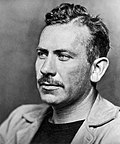 1902–1968John SteinbeckUnited Statesshaped Dowlatabadi · kindred genres: family saga, tragedy1936–1972Ghassan KanafaniPalestineshared movement: Arabic & Middle Eastern Modern · kindred genres: tragedy · same region & erab. 1978Jokha AlharthiOmanshared movement: Arabic & Middle Eastern Modern · kindred genres: family saga · same region & era
 1903–1951Sadegh HedayatIranshared movement: Arabic & Middle Eastern Modern · both write in Persian · same region & era
 b. 1957Alaa Al AswanyEgyptshared movement: Arabic & Middle Eastern Modern · kindred genres: family saga · same region & era
 1905–1984Mikhail SholokhovRussiashaped Dowlatabadi