
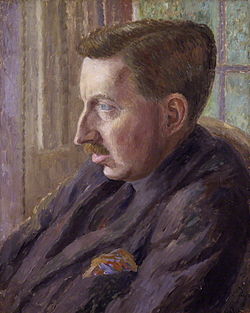
E. M. Forster
England
Measured, ironic, and quietly aphoristic: a narrator's calm liberal humanism straining, sentence by sentence, against the barriers it describes.
Forster was educated at Cambridge, where he joined the secretive discussion society the Apostles and found the tolerant intellectual circle that shaped his lifelong liberalism. Between 1905 and 1910 he published four novels in rapid succession, Where Angels Fear to Tread, A Room with a View, and Howards End among them, establishing him, still in his twenties, as a major novelist of Edwardian England.
Two trips to India, including a stint as private secretary to a Maharajah, gave him the material for A Passage to India (1924), which became both his masterpiece and his last published novel; he lived another forty-six years without releasing another. He had written Maurice, a novel of homosexual love, as early as 1913–14, but kept it in a drawer, unpublishable under British law criminalizing homosexuality; it appeared only in 1971, a year after his death at ninety-one.
Lines of influence
No ancestors recorded: a headwater.
Their books in the atlas
- 1910
 Howards EndLvl 5family saga
 - 1924
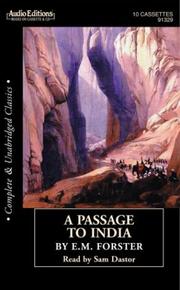 A Passage to IndiaLvl 6colonial & postcolonial
Meanwhile, elsewhere
 1878–1968Upton SinclairUnited StatesNorth America · United States
 1884–1969Rómulo GallegosVenezuelaLatin America · Venezuela
 1887–1970S. Y. AgnonUkraine (Galicia) / IsraelMiddle East · Ukraine (Galicia) / Israel
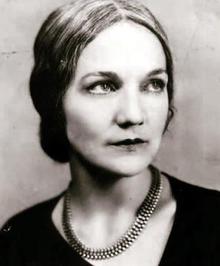 1890–1980Katherine Anne PorterUnited StatesNorth America · United States
 1884–1964Halide Edip AdıvarTurkeyMiddle East · Turkey
 1891–1980Henry MillerUnited StatesNorth America · United States
If you like Forster, try
 1920–1978Paul ScottEnglandshaped by Forster · kindred genres: colonial & postcolonial · neighboring movements
 b. 1975Zadie SmithEnglandshaped by Forster · kindred genres: family saga, satire · neighboring movements
 1903–1966Evelyn WaughEnglandshared movement: The British Midcentury Novel · kindred genres: family saga, satire · same region & era
 1918–2006Muriel SparkScotlandshared movement: The British Midcentury Novel · kindred genres: psychological novel, satire · same region & era
 1919–1999Iris MurdochIreland / Englandshared movement: The British Midcentury Novel · kindred genres: psychological novel · same region & era
 1903–1950George OrwellEnglandshared movement: The British Midcentury Novel · kindred genres: satire · same region & era