

Kazuo Ishiguro
England / Japan
Quiet, formal, and withholding: narrators whose careful, understated diction reveals far more than they intend to confess.
Ishiguro moved from Nagasaki to England at five, when his father took an oceanography research post, and grew up believing the family's stay would be temporary: a sense of displaced Englishness he later said shaped every book he wrote. He studied creative writing at the University of East Anglia under Malcolm Bradbury and Angela Carter, part of the same graduate program that trained a generation of British novelists.
The Remains of the Day (1989), narrated by a butler whose loyalty has cost him any independent life, won the Booker Prize and became his defining early success. Never Let Me Go (2005) applied the same restrained, evasive narration to a group of cloned children raised for organ donation. He won the Nobel Prize in Literature in 2017, cited for novels of 'great emotional force' beneath their controlled surfaces.
Lines of influence
No descendants recorded, yet.
Their books in the atlas
- 1982
 A Pale View of HillsLvl 4psychological novel
 - 1986
 An Artist of the Floating WorldLvl 4psychological novel
 - 1989
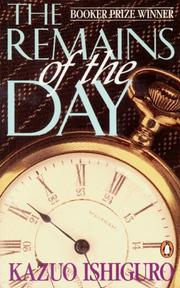 The Remains of the DayLvl 5psychological novel
 - 2005
 Never Let Me GoLvl 4dystopian
 - 2015
 The Buried GiantLvl 5speculative fiction
Meanwhile, elsewhere
 b. 1942Péter NádasHungaryRussia & Eastern Europe · Hungary
 b. 1937Thomas PynchonUSANorth America · USA
 b. 1936Don DeLilloUSANorth America · USA
 b. 1943Marilynne RobinsonUnited StatesNorth America · United States
 b. 1954Louise ErdrichUnited StatesNorth America · United States
 b. 1954Sandra CisnerosUnited States / MexicoNorth America · United States / Mexico
If you like Ishiguro, try
 b. 1970Han KangSouth Koreashared movement: Contemporary World Fiction · both shaped by Kafka · kindred genres: psychological novel, historical fiction
 b. 1978Samanta SchweblinArgentinashared movement: Contemporary World Fiction · both shaped by Kafka · kindred genres: psychological novel, speculative fiction
 b. 1940J. M. CoetzeeSouth Africa / Australiashared movement: Contemporary World Fiction · both shaped by Kafka · kindred genres: psychological novel, philosophical novel
 1944–2001W. G. SebaldGermany / Englandshared movement: Contemporary World Fiction · both shaped by Kafka · same region & era
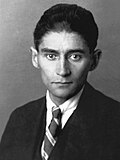 1883–1924Franz KafkaCzechia (Bohemia)shaped Ishiguro · neighboring movements
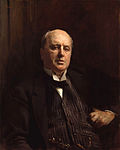 1843–1916Henry JamesUSA / Englandshaped Ishiguro · kindred genres: psychological novel, philosophical novel