

Carmen Laforet
Spain
Charged, feverish, close-quarters prose: hunger and confinement rendered with an adolescent's raw immediacy inside crumbling domestic walls.
Laforet was twenty-three, largely unpublished, and living in Barcelona when she submitted Nada to the inaugural Nadal Prize, Spain's most prestigious new literary award, and won, stunning a literary culture still reeling from the Civil War and operating under Francoist censorship.
The novel's claustrophobic portrait of hunger, repression, and a feuding household resonated so completely with postwar Spanish readers that it made her famous nearly overnight. She never matched it again: subsequent novels went unfinished or were abandoned, personal crises and a deepening religious life pulled her toward long stretches of near-silence, and by her later decades she had largely withdrawn from public literary life altogether.
She died in 2004, remembered still almost entirely for the novel she wrote before turning twenty-four.
Lines of influence
No ancestors recorded: a headwater.
Their books in the atlas
- 1945
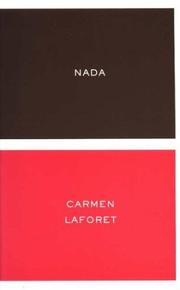 NadaLvl 5bildungsroman
Meanwhile, elsewhere
 1918–2008Aleksandr SolzhenitsynRussiaRussia & Eastern Europe · Russia
 1921–2006Stanisław LemPolandRussia & Eastern Europe · Poland
 1917–2007Magda SzabóHungaryRussia & Eastern Europe · Hungary
 1915–2005Saul BellowCanada / USANorth America · Canada / USA
 1919–2010J. D. SalingerUnited StatesNorth America · United States
 1918–2005Mary Lee SettleUnited StatesNorth America · United States
If you like Laforet, try
 1925–2000Carmen Martín GaiteSpainshaped by Laforet · shared movement: The Feminist Novel · both write in Spanish
 b. 1940Annie ErnauxFranceshared movement: The Feminist Novel · kindred genres: family saga · same region & era
 1930–2024Edna O'BrienIrelandshared movement: The Feminist Novel · kindred genres: bildungsroman · same region & era
 b. 1959Tsitsi DangarembgaZimbabweshared movement: The Feminist Novel · kindred genres: bildungsroman, family saga
 1933–2017David StoreyEnglandkindred genres: bildungsroman, family saga · same region & era
 1885–1930D. H. LawrenceEnglandkindred genres: bildungsroman, family saga · neighboring movements · same region & era