

Doris Lessing
United Kingdom / Zimbabwe
Unflinching and clear-eyed, personal confession folded into political analysis: prose willing to sit inside discomfort rather than resolve it.
Lessing was born in Persia to British parents and raised on a failing maize farm in Southern Rhodesia, leaving school at fourteen and, later, two failed marriages; she left two young children with her first husband when she departed for London in 1949 with the manuscript of The Grass Is Singing in her luggage. She had joined the Communist Party in Rhodesia and remained one in London until the Soviet crushing of the Hungarian uprising in 1956 broke her allegiance.
The Golden Notebook (1962), splitting a woman's fractured life across four color-coded notebooks, became a landmark of formal experiment and was claimed by a feminist movement she viewed with some wariness. She later turned to speculative fiction and Sufi mysticism. In 2007, at eighty-eight, she learned of her Nobel Prize from reporters waiting outside her house and greeted the news with a famously deadpan 'Oh Christ.' She died in London in 2013.
Their books in the atlas
- 1950
 The Grass Is SingingLvl 4colonial & postcolonial
 - 1952
 Martha QuestLvl 4bildungsroman
 - 1962
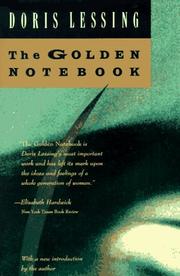 The Golden NotebookLvl 8postmodern
 - 1974
 Memoirs of a SurvivorLvl 6speculative fiction
 - 1988
 The Fifth ChildLvl 4gothic
Meanwhile, elsewhere
 1911–2011Ernesto SabatoArgentinaLatin America · Argentina
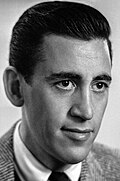 1919–2010J. D. SalingerUnited StatesNorth America · United States
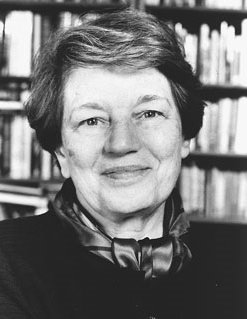 1922–2014Mavis GallantCanadaNorth America · Canada
 1923–2013Álvaro MutisColombiaLatin America · Colombia
 1923–2014Nadine GordimerSouth AfricaAfrica · South Africa1923–2015Yaşar KemalTurkeyMiddle East · Turkey
If you like Lessing, try
 1908–1986Simone de BeauvoirFranceshared movement: The Feminist Novel · kindred genres: psychological novel · same region & era
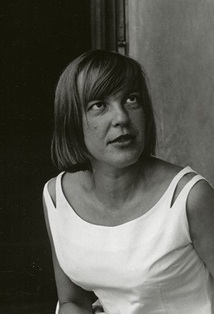 1926–1973Ingeborg BachmannAustriashared movement: The Feminist Novel · kindred genres: psychological novel · same region & era
 1929–2011Christa WolfGermanyshared movement: The Feminist Novel · kindred genres: psychological novel · same region & era
 b. 1946Elfriede JelinekAustriashared movement: The Feminist Novel · kindred genres: psychological novel · same region & era
 1917–1976Tove DitlevsenDenmarkkindred genres: psychological novel · neighboring movements · same region & era
 1911–1991Max FrischSwitzerlandkindred genres: psychological novel, tragedy · neighboring movements · same region & era