

Nguyễn Du
Vietnam
Lyrical Vietnamese verse in strict six-eight lục bát meter, folk proverb and classical allusion woven into the same line: grief rendered with musical, almost incantatory inevitability.
Nguyễn Du was born into a mandarin family in Hà Tĩnh amid the last convulsions of the Trịnh–Nguyễn wars, and lived through the fall of the Lê dynasty and the Tây Sơn rebellion that scattered his relatives across the country. He served, reluctantly, as a mandarin and diplomat under the new Nguyễn dynasty, once traveling to Qing China on embassy: an immersion in Chinese letters he balanced against writing in Vietnamese's vernacular Nôm script.
The Tale of Kiều, composed in his final years, adapts a minor Chinese novel into 3,254 rhymed Vietnamese couplets: Thúy Kiều, a gifted and filial daughter, sells herself into concubinage to save her father, then endures brothels, forced marriages, and exile before a fragile reunion. Its fusion of Confucian duty, Buddhist karma, and near-unbearable suffering made it Vietnam's national epic.
He died suddenly in 1820, having given Vietnamese literature the single work still recited from memory, quoted in daily speech, and consulted like an oracle across the country today.
Their books in the atlas
- 1820
 The Tale of KiềuLvl 6epic
Meanwhile, elsewhere
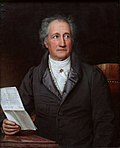 1749–1832Johann Wolfgang von GoetheGermanyWestern Europe · Germany
 1764–1823Ann RadcliffeEnglandWestern Europe · England
 1771–1832Walter ScottScotlandWestern Europe · Scotland
 1776–1822E. T. A. HoffmannGermanyWestern Europe · Germany
 1775–1817Jane AustenEnglandWestern Europe · England
 1741–1803Pierre Choderlos de LaclosFranceWestern Europe · France
If you like Du, try
 750–700 BCEHomerAncient Greecekindred genres: epic, tragedy
 1777–1811Heinrich von KleistGermanykindred genres: tragedyb. 1978Madeline MillerUnited Stateskindred genres: epic, tragedy1749–1832Johann Wolfgang von GoetheGermanykindred genres: tragedy
 940 CE–1020Abolqasem FerdowsiPersiakindred genres: epic
 1923–2013Álvaro MutisColombiakindred genres: epic