

Philip K. Dick
United States
Plain, propulsive genre prose that destabilizes its own reality mid-scene: paranoia and metaphysical doubt delivered in unadorned pulp sentences.
Dick's twin sister died weeks after their birth in 1928, a loss he carried as lifelong guilt and returned to obsessively across his fiction's doubled and false selves. Raised in Berkeley, he wrote at a furious pace for pulp science-fiction magazines through the 1950s and 60s, married five times, and lived for years in genuine financial precarity, churning out novels for advances that barely covered rent.
In February and March of 1974 he experienced a series of intense visionary episodes he spent the rest of his life trying to interpret theologically and scientifically, filling thousands of pages of a private journal later published as The Exegesis. The Man in the High Castle won the Hugo Award in 1963, and Do Androids Dream of Electric Sheep? became the basis for the film Blade Runner.
He died of a stroke in 1982, months before Blade Runner's release brought his ideas to a mainstream audience he never lived to see.
Their books in the atlas
- 1962
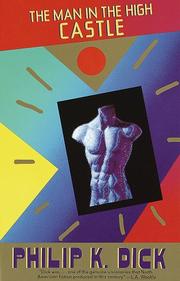 The Man in the High CastleLvl 6speculative fiction
 - 1968
 Do Androids Dream of Electric Sheep?Lvl 5speculative fiction
Meanwhile, elsewhere
 1906–1989Samuel BeckettIreland / FranceWestern Europe · Ireland / France
 1914–1996Marguerite DurasFrance / VietnamWestern Europe · France / Vietnam
 1922–2008Alain Robbe-GrilletFranceWestern Europe · France
 1923–1985Italo CalvinoItalyWestern Europe · Italy
 1908–1986Simone de BeauvoirFranceWestern Europe · France
 1916–1991Natalia GinzburgItalyWestern Europe · Italy
If you like Dick, try
 1947–2006Octavia ButlerUnited Statesshared movement: Literary Speculation · kindred genres: speculative fiction, dystopian · same region & era
 1884–1937Yevgeny ZamyatinRussiashared movement: Literary Speculation · kindred genres: dystopian, speculative fiction
 1929–2018Ursula K. Le GuinUnited Statesshared movement: Literary Speculation · kindred genres: speculative fiction · same region & era
 b. 1939Margaret AtwoodCanadashared movement: Literary Speculation · kindred genres: dystopian, speculative fiction · same region & era
 1797–1851Mary ShelleyEnglandkindred genres: speculative fiction, dystopian · neighboring movements
 b. 1963Yann MartelCanadakindred genres: speculative fiction · same region & era