

Wole Soyinka
Nigeria
Dense and allusive, satire layered over Yoruba myth and modernist technique: a demanding, ironic voice built for the stage as much as the page.
Soyinka studied in Ibadan and Leeds before working in London theater, then returned to Nigeria at independence to found theater companies and write the plays that made his name. During the Nigerian Civil War he was arrested for meeting with Biafran representatives in an attempt to broker peace, and spent twenty-two months in solitary confinement, an ordeal he later documented in the memoir The Man Died.
The Interpreters, published in 1965 and his only novel, followed a group of young Nigerian intellectuals drifting through Lagos nightlife after independence, their early idealism curdling into satire and disillusionment. Soyinka has remained primarily a dramatist and essayist across a career spanning dozens of plays, but the Nobel Prize in Literature he won in 1986 (the first awarded to any African writer) named him for the whole scope of that work. He has continued to speak out against Nigerian and African authoritarianism, at times from exile, into his old age.
Their books in the atlas
- 1960
 A Dance of the ForestsLvl 8drama
 - 1963
 The Lion and the JewelLvl 3drama
 - 1965
 The InterpretersLvl 8satire
 - 1973
 Season of AnomyLvl 8political novel
 - 1975
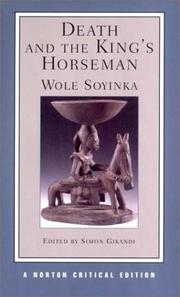 Death and the King's HorsemanLvl 6tragedy
Meanwhile, elsewhere
 b. 1933Cees NooteboomNetherlandsWestern Europe · Netherlands
 b. 1933Penelope LivelyEnglandWestern Europe · Englandb. 1928William KennedyUnited StatesNorth America · United States
 b. 1933Norman RushUnited StatesNorth America · United States
 b. 1932Elena PoniatowskaMexicoLatin America · Mexico
 b. 1935E. Annie ProulxUnited StatesNorth America · United States
If you like Soyinka, try
 1939–2023Ayi Kwei ArmahGhanashared movement: Founding African Anglophone Fiction · kindred genres: colonial & postcolonial, satire · same region & era
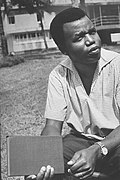 1930–2013Chinua AchebeNigeriashared movement: Founding African Anglophone Fiction · kindred genres: colonial & postcolonial, satire · same region & era
 1942–2023Ama Ata AidooGhanashared movement: Founding African Anglophone Fiction · kindred genres: colonial & postcolonial, satire · same region & era
 b. 1938Ngũgĩ wa Thiong'oKenyakindred genres: colonial & postcolonial, political novel · neighboring movements · same region & era
 1920–1997Amos TutuolaNigeriashared movement: Founding African Anglophone Fiction · same region & era
 b. 1948Zakes MdaSouth Africakindred genres: colonial & postcolonial, satire · neighboring movements · same region & era