The Russian Silver Age
Symbolism, apocalypse, and the last flowering of Russian literature before Stalin's clampdown.
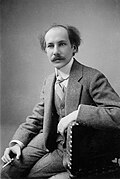
Between Chekhov's death and Stalin's clampdown, Russian writing entered a hothouse of symbolism and apocalyptic foreboding, sensing catastrophe before it arrived. Andrei Bely's Petersburg dissolves the czarist capital into rhythmic, hallucinatory prose, a terrorist plot and a father-son war rendered so that Nabokov ranked it alongside Ulysses among the century's greatest novels. Ivan Bunin carried the Golden Age's realist precision into exile and became the first Russian Nobel laureate, writing doomed, nostalgic portraits of a world the Revolution had already erased.
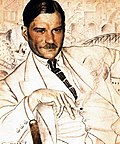
Yevgeny Zamyatin closed the era with We, banned outright by the new Soviet censors in 1921: a glass city, a numbered citizen, and a State that has abolished the imagination itself, smuggled abroad in manuscript years before Huxley or Orwell wrote their answers. The Silver Age did not so much end as get amputated: revolution scattered its writers into emigration, execution, silence, or the desk drawer, passing its traditions of concealment directly to the Soviet-era literature that followed.
How to spot it on the page
- Apocalyptic foreboding and symbolist mysticism sensing catastrophe before it arrives
- A city (Petersburg, a glass capital) dissolved into rhythmic, hallucinatory prose
- The individual reduced to a number or function by an all-seeing State
- Manuscripts smuggled abroad or written with no expectation of publication
- Realist precision turned elegiac, mourning a world already gone
- Revolution as the horizon every character senses but cannot yet name
What it left behind
Revolution amputated the Silver Age rather than let it wind down naturally: Bely died in Stalin's Moscow half-silenced, Bunin in Paris exile, Zamyatin's We circulating only abroad. But its inventions became the Soviet century's inheritance wholesale, the manuscript-for-the-drawer, the allegory smuggled past a censor, the city rendered as hallucination, all reappear directly in Bulgakov and Grossman.
Defining works
For a guided order with notes, follow the reading path →
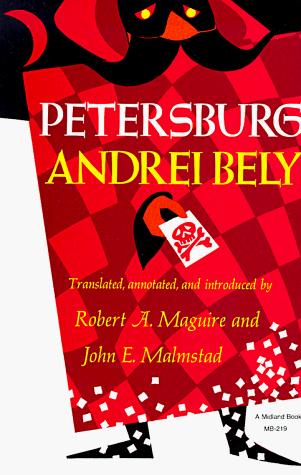
Andrei Bely · 1913
A czarist bureaucrat is stalked through a city of shadows and fog by his own son, carrying a bomb timed to kill him. Nabokov ranked this rhythmic, hallucinatory novel with Ulysses among the century's four greatest: Russian Symbolism's strangest, most unjustly overlooked masterpiece.

Yevgeny Zamyatin · 1924
A glass city of numbered citizens ruled by the Benefactor, and one engineer's dangerous stirring of a soul. The first great dystopia, written by a disillusioned Bolshevik: the blueprint Orwell and Huxley would build on.