

Anthony Burgess
England
Dense, linguistically inventive prose, often narrated in invented slang, that forces the reader to learn a new language before trusting the story.
Burgess spent his thirties as a colonial education officer in Malaya and Brunei before collapsing in 1959 and being told, mistakenly, that he had a brain tumor and a year left to live; he spent that supposed final year writing furiously to leave his wife an income, producing several novels almost at once and discovering he could sustain the pace indefinitely once the diagnosis proved wrong.
A Clockwork Orange invented Nadsat, a teenage slang fusing Russian and English cockney, to narrate a young thug's ultraviolence and forced rehabilitation from the inside: a formal gamble that became his best-known and most filmed book, adapted by Stanley Kubrick in 1971 over Burgess's own mixed feelings about the result. He wrote dozens more novels, plus criticism, screenplays, and musical compositions, remaining restlessly prolific until his death in 1993.
Their books in the atlas
- 1962
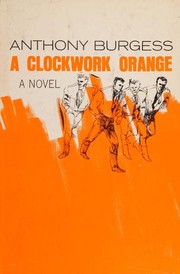 A Clockwork OrangeLvl 7dystopian
 - 1980
 Earthly PowersLvl 7historical fiction
Meanwhile, elsewhere
 1914–1997Bohumil HrabalCzechiaRussia & Eastern Europe · Czechia
 1917–2007Magda SzabóHungaryRussia & Eastern Europe · Hungary
 1913–1994Ralph EllisonUSANorth America · USA
 1915–2005Saul BellowCanada / USANorth America · Canada / USA
 1909–2001Eudora WeltyUnited StatesNorth America · United States
 1913–1995Robertson DaviesCanadaNorth America · Canada
If you like Burgess, try
 1918–2006Muriel SparkScotlandshared movement: The British Midcentury Novel · kindred genres: satire · same region & era
 1922–1995Kingsley AmisEnglandshared movement: The British Midcentury Novel · kindred genres: satire · same region & era
 1903–1950George OrwellEnglandshared movement: The British Midcentury Novel · kindred genres: dystopian, satire · same region & era
 1894–1963Aldous HuxleyEnglandshared movement: The British Midcentury Novel · kindred genres: satire, dystopian · same region & era
 1935–1979J. G. FarrellEnglandkindred genres: satire, historical fiction · neighboring movements · same region & era
 1949–2023Martin AmisEnglandkindred genres: satire · neighboring movements · same region & era