

Ismail Kadare
Albania
Spare and legend-toned, myth and bureaucratic menace laid side by side so plainly that the reader supplies the danger the sentences themselves refuse to name.
Born in 1936 in Gjirokastër, the same fortress town that produced dictator Enver Hoxha, Kadare studied at Moscow's Gorky Literary Institute in the late 1950s before the Soviet-Albanian split sent him home to become the dominant literary voice inside one of Europe's most repressive Stalinist regimes.
He threaded criticism through historical allegory, myth, and Ottoman-era legend, forms oblique enough to pass state censors while still carrying unmistakable subtext, and moved between uneasy official favor (for a time he held a seat in Albania's rubber-stamp parliament) and outright bans on individual books, The Palace of Dreams among them. The General of the Dead Army, his early novel of an Italian general exhuming war dead from Albanian soil, made him internationally known while he was still in his twenties.
He defected to Paris in 1990, weeks before the regime finally collapsed, and split his remaining decades between France and Albania. He won the inaugural Man Booker International Prize in 2005 and died in Tirana in 2024.
Their books in the atlas
- 1963
 The General of the Dead ArmyLvl 5war novel
 - 1970
 The SiegeLvl 5historical fiction
 - 1971
 Chronicle in StoneLvl 4war novel
 - 1978
 Broken AprilLvl 5tragedy
 - 1981
 The Palace of DreamsLvl 5dystopian
Meanwhile, elsewhere
 b. 1933Cees NooteboomNetherlandsWestern Europe · Netherlands
 1930–2024Edna O'BrienIrelandWestern Europe · Ireland
 b. 1933Penelope LivelyEnglandWestern Europe · England
 b. 1936Don DeLilloUSANorth America · USA
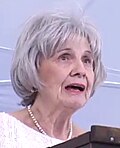 1931–2024Alice MunroCanadaNorth America · Canada
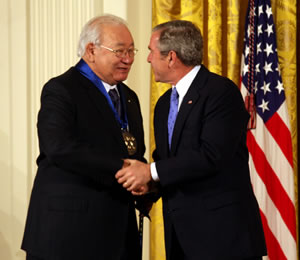 1934–2024N. Scott MomadayUnited StatesNorth America · United States
If you like Kadare, try
 1918–2008Aleksandr SolzhenitsynRussiakindred genres: political novel, historical fiction · same region & era
 1905–1984Mikhail SholokhovRussiakindred genres: political novel, war novel · same region & era
 b. 1943Ludmila UlitskayaRussiakindred genres: political novel, war novel · same region & era
 1905–1964Vasily GrossmanUkraine / Russiakindred genres: political novel, war novel · same region & era
 1933–1991Jerzy KosińskiPoland / USAkindred genres: political novel, war novel · same region & era
 1900–1989Sándor MáraiHungarykindred genres: historical fiction, war novel · same region & era