

Sándor Márai
Hungary
Formal, candlelit, and slow-burning, long unbroken monologues of civilized speech circling a single old wound until every last evasion has been spoken aloud.
Born in 1900 in Kassa to an upper-middle-class family, Márai worked as a young journalist in Weimar-era Frankfurt and Berlin and then in Paris through the 1920s before returning home to become one of interwar Budapest's most prominent novelists, columnists, and diarists, keeping a private journal for most of his adult life.
Fiercely opposed to both fascism and communism, he refused to publish under the censorship the Communist regime imposed after 1948 and chose exile instead, settling first in Italy and eventually in San Diego. His books vanished from print in Hungary for decades, and he lived out his later years largely unknown to the country whose vanished bourgeois world he had spent his career elegizing.
His wife Ilona died in 1986 and their adopted son soon after; grief-stricken and in failing health, Márai shot himself in San Diego in 1989. Only after communism fell did Embers resurface in translation, turning him into an international bestseller he did not live to see.
Their books in the atlas
- 1930
 The RebelsLvl 5war novel
 - 1939
 Esther's InheritanceLvl 4psychological novel
 - 1940
 Casanova in BolzanoLvl 5historical fiction
 - 1942
 EmbersLvl 5psychological novel
Meanwhile, elsewhere
 1900–1999Nathalie SarrauteFranceWestern Europe · France
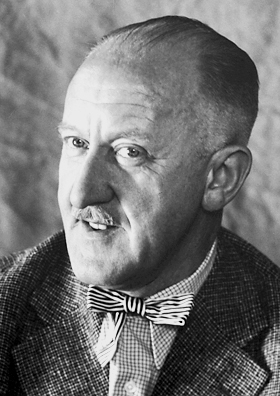 1902–1998Halldór LaxnessIcelandWestern Europe · Iceland
 1902–1991Isaac Bashevis SingerPoland / United StatesNorth America · Poland / United States
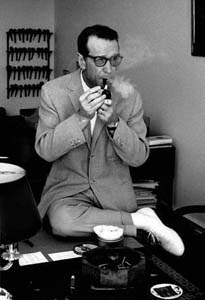 1903–1989Georges SimenonBelgiumWestern Europe · Belgium
 1899–1986Jorge Luis BorgesArgentinaLatin America · Argentina
 1903–1993Silvina OcampoArgentinaLatin America · Argentina
If you like Márai, try
 1917–2007Magda SzabóHungaryshared movement: Mitteleuropa · kindred genres: psychological novel, family saga · both write in Hungarian
 b. 1942Péter NádasHungaryshared movement: Mitteleuropa · kindred genres: psychological novel · both write in Hungarian
 1894–1939Joseph RothAustria (Galicia)shared movement: Mitteleuropa · kindred genres: family saga, historical fiction · same region & era
 1950–2016Péter EsterházyHungaryshared movement: Mitteleuropa · both write in Hungarian · same region & era
 1828–1910Leo TolstoyRussiakindred genres: psychological novel, family saga · neighboring movements · same region & era
 b. 1943Ludmila UlitskayaRussiakindred genres: family saga, historical fiction · neighboring movements · same region & era