

Imre Kertész
Hungary
Flat, obedient, and quietly unbearable, a narrating voice that reports atrocity in the same reasonable tone as breakfast, refusing the reader any foothold of outrage.
Deported from Budapest to Auschwitz at fourteen in 1944, Kertész survived subsequent transport to Buchenwald and a satellite labor camp before returning home in 1945 to find much of his family gone. He worked as a journalist until 1951, when the newspaper was purged and realigned to strict Party doctrine and he lost his job, followed by a stint in a factory and compulsory military service.
For decades afterward he supported himself as a freelance translator of German-language writers, including Nietzsche, Freud, and Wittgenstein, while spending more than ten years writing Fatelessness in near isolation. Publishers rejected it repeatedly; it finally appeared in 1975 to almost no notice, followed by Kaddish for an Unborn Child, his uncompromising refusal to bring a child into a world that had produced the camps.
He won the Nobel Prize in Literature in 2002, the first Hungarian laureate, and spent his final years battling Parkinson's disease before his death in Budapest in 2016.
Their books in the atlas
- 1975
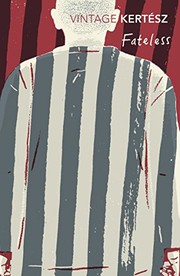 FatelessnessLvl 6war novel
 - 1988
 FiascoLvl 8postmodern
 - 1990
 Kaddish for an Unborn ChildLvl 9philosophical novel
 - 2003
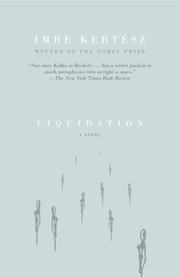 LiquidationLvl 7postmodern
Meanwhile, elsewhere
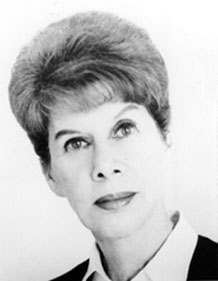 1928–2016Anita BrooknerEnglandWestern Europe · England
 1929–2018Ursula K. Le GuinUnited StatesNorth America · United States
 1926–2016Harper LeeUnited StatesNorth America · United Statesb. 1928William KennedyUnited StatesNorth America · United States
 1926–2020Alison LurieUSANorth America · USA
If you like Kertész, try
 1950–2016Péter EsterházyHungarykindred genres: postmodern, autobiographical fiction · both write in Hungarian · same region & era
 b. 1954László KrasznahorkaiHungarykindred genres: philosophical novel, postmodern · both write in Hungarian · same region & era
 1917–2007Magda SzabóHungarykindred genres: autobiographical fiction · both write in Hungarian · same region & era
 b. 1942Péter NádasHungaryboth write in Hungarian · same region & era
 b. 1940Gao XingjianChina / Francekindred genres: autobiographical fiction, postmodern
 1900–1989Sándor MáraiHungaryboth write in Hungarian · same region & era