

François Mauriac
France
Taut, humid, claustrophobic prose: provincial bourgeois rooms rendered so precisely they seem to close in on the people trapped inside them.
Mauriac grew up among the pine forests and vineyards near Bordeaux that recur throughout his fiction, in a devout, tightly wound Catholic family whose repressions he spent his career anatomizing. Thérèse Desqueyroux (1927) drew loosely on a real regional poisoning case; his heroine's guilt without repentance became the signature Mauriac predicament: sin observed with total moral seriousness, but never simplified into either damnation or easy grace.
He was awarded the Nobel Prize in Literature in 1952. In later decades he became one of France's most prominent political journalists, a vocal opponent of Franco's Spain and, controversially for his conservative readership, of French torture during the Algerian War, while remaining close to Charles de Gaulle.
He died in Paris in 1970.
Lines of influence
No descendants recorded, yet.
Their books in the atlas
- 1927
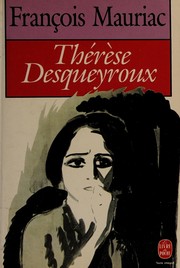 Thérèse DesqueyrouxLvl 5psychological novel
 - 1932
 The Knot of VipersLvl 5psychological novel
Meanwhile, elsewhere
 1884–1969Rómulo GallegosVenezuelaLatin America · Venezuela
 1878–1968Upton SinclairUnited StatesNorth America · United States
 1887–1970S. Y. AgnonUkraine (Galicia) / IsraelMiddle East · Ukraine (Galicia) / Israel
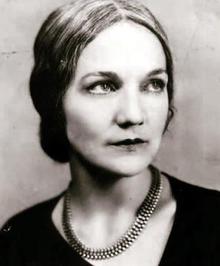 1890–1980Katherine Anne PorterUnited StatesNorth America · United States
 1891–1980Henry MillerUnited StatesNorth America · United States
 1886–1965Jun'ichirō TanizakiJapanEast Asia · Japan
If you like Mauriac, try
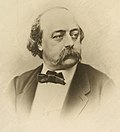 1821–1880Gustave FlaubertFranceshaped Mauriac · kindred genres: psychological novel, tragedy · both write in French
 1850–1893Guy de MaupassantFranceboth shaped by Flaubert · kindred genres: psychological novel, family saga · both write in French
 1840–1902Émile ZolaFranceboth shaped by Flaubert · kindred genres: tragedy, psychological novel · both write in French
 1871–1922Marcel ProustFranceboth shaped by Flaubert · kindred genres: psychological novel · both write in French
 1848–1907Joris-Karl HuysmansFranceboth shaped by Flaubert · kindred genres: psychological novel · both write in French
 1852–1901Leopoldo Alas "Clarín"Spainboth shaped by Flaubert · kindred genres: psychological novel, tragedy · same region & era