
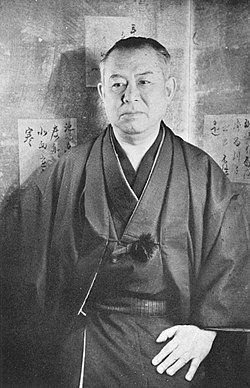
Jun'ichirō Tanizaki
Japan
Sumptuous and unhurried, lingering over surfaces (fabric, food, skin, light) with an eroticism that is as much about looking as touching.
Tanizaki grew up in a once-prosperous Tokyo merchant family whose decline he later mined for fiction, and started out infatuated with Poe and Wilde, writing early tales of masochistic obsession like Naomi, in which a man remakes a café waitress into his ideal, and his tormentor.
The 1923 Great Kantō earthquake drove him from Tokyo to the Osaka region, and his aesthetic pivoted with him: Some Prefer Nettles weighs a failing marriage against the pull of old Japan, In Praise of Shadows is his essay-length defense of dim rooms and lacquerware over electric light, and The Makioka Sisters (written under, then finished after, wartime censorship) became his elegy for a genteel world the war erased.
He translated The Tale of Genji into modern Japanese three separate times and was nominated for the Nobel Prize repeatedly before his death in 1965.
Lines of influence
No descendants recorded, yet.
Their books in the atlas
- 1925
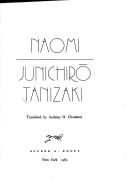 NaomiLvl 4psychological novel
 - 1929
 Some Prefer NettlesLvl 4psychological novel
 - 1931
 QuicksandLvl 5psychological novel
 - 1948
 The Makioka SistersLvl 4family saga
 - 1956
 The KeyLvl 5psychological novel
Meanwhile, elsewhere
 1879–1970E. M. ForsterEnglandWestern Europe · England
 1885–1970François MauriacFranceWestern Europe · France
 1878–1968Upton SinclairUnited StatesNorth America · United States
 1884–1969Rómulo GallegosVenezuelaLatin America · Venezuela
 1884–1964Halide Edip AdıvarTurkeyMiddle East · Turkey
 1887–1970S. Y. AgnonUkraine (Galicia) / IsraelMiddle East · Ukraine (Galicia) / Israel
If you like Tanizaki, try
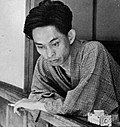 1899–1972Yasunari KawabataJapanshared movement: Japanese Modernism & Aesthetics · kindred genres: psychological novel, family saga · both write in Japanese
 1925–1970Yukio MishimaJapanboth shaped by Wilde · kindred genres: psychological novel · both write in Japanese
 1867–1916Natsume SōsekiJapanshared movement: Japanese Modernism & Aesthetics · kindred genres: psychological novel, satire · both write in Japanese
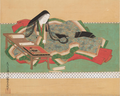 973 CE–1014Murasaki ShikibuJapanshaped Tanizaki · kindred genres: psychological novel · both write in Japanese
 1892–1927Ryūnosuke AkutagawaJapanshared movement: Japanese Modernism & Aesthetics · kindred genres: psychological novel, satire · both write in Japanese
 1909–1948Osamu DazaiJapankindred genres: psychological novel, family saga · both write in Japanese · neighboring movements