

Haruki Murakami
Japan
Cool, conversational, and dryly funny, drifting between mundane American-inflected detail and sudden wells of the uncanny without ever raising its voice.
Murakami ran a Tokyo jazz club called Peter Cat with his wife through most of his twenties, an unlikely training ground he has credited for his prose's rhythm. The decision to write came in an instant, he says, at a baseball game in 1978, watching a batter hit a double. He went home and wrote through the night, producing his first novel, Hear the Wind Sing, within months.
He sold the bar to write full-time and has since translated Fitzgerald, Carver, and Chandler into Japanese alongside his own fiction. Norwegian Wood's runaway success in Japan made him so recognizable he decamped to Europe and then the United States for years; The Wind-Up Bird Chronicle, written partly from Princeton, expanded his private mythology of wells and vanished women into an epic reckoning with wartime Manchuria.
An avid marathon runner, he has published a memoir on the sport alongside a body of fiction now translated into some fifty languages.
Lines of influence
No descendants recorded, yet.
Their books in the atlas
- 1987
 Norwegian WoodLvl 3bildungsroman
 - 1994
 The Wind-Up Bird ChronicleLvl 7magical realism
 - 2002
 Kafka on the ShoreLvl 6magical realism
Meanwhile, elsewhere
 b. 1940Annie ErnauxFranceWestern Europe · France
 b. 1948Ian McEwanEnglandWestern Europe · England
 b. 1946Julian BarnesEnglandWestern Europe · England
 b. 1944Bernhard SchlinkGermanyWestern Europe · Germany
 b. 1943Pat BarkerEnglandWestern Europe · England
 b. 1945John BanvilleIrelandWestern Europe · Ireland
If you like Murakami, try
 b. 1964Banana YoshimotoJapanshared movement: The New Japanese Voice · kindred genres: bildungsroman · both write in Japanese
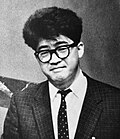 1924–1993Kōbō AbeJapanboth shaped by Kafka · both write in Japanese · neighboring movements
 b. 1970Han KangSouth Koreashared movement: Contemporary World Fiction · both shaped by Kafka · same region & era
 1922–2007Kurt VonnegutUSAshaped Murakami · neighboring movements
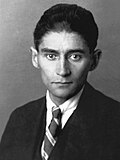 1883–1924Franz KafkaCzechia (Bohemia)shaped Murakami · neighboring movements
 b. 1940J. M. CoetzeeSouth Africa / Australiashared movement: Contemporary World Fiction · both shaped by Kafka