

Sylvia Plath
United States
Clipped, glittering sentences shot through with clinical precision and mounting claustrophobia, wit curdling into despair without ever raising its voice.
Plath's father, a domineering entomology professor, died when she was eight after refusing treatment for diabetes, a loss that haunts her poetry and fiction alike. A scholarship student at Smith College, she suffered a breakdown and underwent electroconvulsive treatment after a summer guest-editing a New York magazine, an ordeal she later transposed into The Bell Jar.
A Fulbright took her to Cambridge, where she married the poet Ted Hughes in 1956; the marriage produced two children and, after his affair became known, a separation. The Bell Jar appeared in London in January 1963 under the pseudonym Victoria Lucas, weeks before she took her own life in a freezing flat with a gas oven, having sealed the door to her sleeping children's room.
Hughes controlled her literary estate for decades, editing and destroying portions of her journals, feeding years of controversy over how her legacy was shaped by others after her death.
Their books in the atlas
- 1963
 The Bell JarLvl 4psychological novel
Meanwhile, elsewhere
 1906–1989Samuel BeckettIreland / FranceWestern Europe · Ireland / France
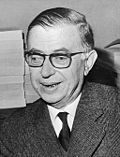 1905–1980Jean-Paul SartreFranceWestern Europe · France
 1914–1996Marguerite DurasFrance / VietnamWestern Europe · France / Vietnam
 1922–2008Alain Robbe-GrilletFranceWestern Europe · France
 1923–1985Italo CalvinoItalyWestern Europe · Italy
 1916–1991Natalia GinzburgItalyWestern Europe · Italy
If you like Plath, try
 1935–2003Carol ShieldsCanada / United Statesshared movement: The Feminist Novel · kindred genres: psychological novel · same region & era
 b. 1944Alice WalkerUnited Statesshared movement: The Feminist Novel · kindred genres: bildungsroman · same region & era
 1919–2013Doris LessingUnited Kingdom / Zimbabweshared movement: The Feminist Novel · kindred genres: psychological novel, bildungsroman
 1930–2024Edna O'BrienIrelandshared movement: The Feminist Novel · kindred genres: bildungsroman
 1917–1976Tove DitlevsenDenmarkkindred genres: autobiographical fiction, psychological novel · neighboring movements
 1924–1987James BaldwinUSA / Francekindred genres: autobiographical fiction, bildungsroman · same region & era