

José Saramago
Portugal
Long, breathless, quotation-mark-free sentences that flood past every pause: narrative voice and crowd voice merging into one unbroken current.
Saramago grew up poor in rural Portugal, left school young for lack of money, and worked for decades as a mechanic, translator, journalist, and publishing editor before fiction became his living. He joined the Portuguese Communist Party in 1969 and stayed a member the rest of his life; a slim early novel in 1947 was followed by nearly two decades of near-silence as a novelist.
He was almost sixty when Baltasar and Blimunda (1982) announced the fully formed style, flooding, unpunctuated sentences with no quotation marks, that carried him through Blindness and a Nobel Prize in 1998, the first for a Portuguese-language writer. After the Portuguese government blocked The Gospel According to Jesus Christ from a European literary prize over its heterodox treatment of Christ, he left in protest for Lanzarote in the Canary Islands, where he lived and wrote until his death in 2010.
Their books in the atlas
- 1982
 Baltasar and BlimundaLvl 7magical realism
 - 1991
 The Gospel According to Jesus ChristLvl 7historical fiction
 - 1995
 BlindnessLvl 7dystopian
 - 1997
 All the NamesLvl 6psychological novel
 - 2004
 SeeingLvl 7dystopian
Meanwhile, elsewhere
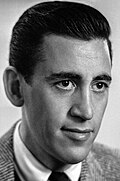 1919–2010J. D. SalingerUnited StatesNorth America · United States
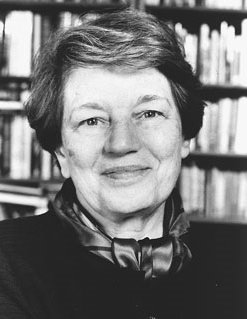 1922–2014Mavis GallantCanadaNorth America · Canada
 1911–2011Ernesto SabatoArgentinaLatin America · Argentina
 1923–2013Álvaro MutisColombiaLatin America · Colombia
 1923–2014Nadine GordimerSouth AfricaAfrica · South Africa1923–2015Yaşar KemalTurkeyMiddle East · Turkey
If you like Saramago, try
 1920–1977Clarice LispectorBrazilkindred genres: philosophical novel, psychological novel · both write in Portuguese
 1929–2011Christa WolfGermanykindred genres: historical fiction, political novel · same region & era
 b. 1942António Lobo AntunesPortugalboth write in Portuguese · same region & era
 1927–2010Harry MulischNetherlandskindred genres: historical fiction, philosophical novel · same region & era
 1888–1935Fernando PessoaPortugalboth write in Portuguese · same region & era
 1927–2015Günter GrassGermanykindred genres: historical fiction, magical realism · same region & era