

Vyasa
Ancient India
Sprawling and encyclopedic, story constantly yielding to philosophical and legal digression; an epic that argues as much as it narrates.
Vyasa is best understood as a traditional attribution rather than a documented historical author: Hindu tradition credits him with compiling the Mahabharata from older bardic material, and the text itself even writes him in as a character, the biological grandfather of its warring Kaurava and Pandava princes, blurring the line between the epic's compiler and its cast.
The Mahabharata that resulted is immense, roughly one hundred thousand verses, the longest epic poem in world literature, centered on a catastrophic war between royal cousins over succession but expanding to absorb philosophy, law, cosmology, and the Bhagavad Gita's meditation on duty, all understood as accreting over centuries of oral transmission and redaction rather than a single sitting.
As with Valmiki, no reliable biographical or chronological facts survive; the name Vyasa functions in later tradition almost as a title for 'compiler,' applied to more than one figure in Hindu textual history, while the epic credited to him remains a living scriptural and cultural touchstone across the subcontinent.
Lines of influence
No ancestors recorded: a headwater.
Their books in the atlas
- 300 BCE
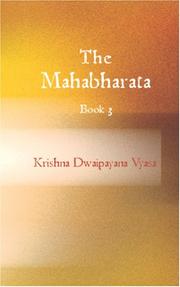 The MahabharataLvl 8epic
If you like Vyasa, try
 375 CE–455 CEKalidasaGupta Indiashaped by Vyasa · shared movement: Sanskrit Epic & Drama · both write in Sanskrit
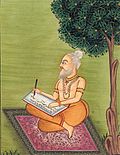 400–320 BCEValmikiAncient Indiashared movement: Sanskrit Epic & Drama · both shaped Kalidasa · kindred genres: epic
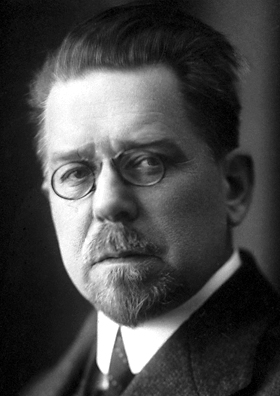 1867–1925Władysław ReymontPolandkindred genres: epic, family saga
 1265–1321Dante AlighieriItalykindred genres: epic
 1608–1674John MiltonEnglandkindred genres: epic
 1715–1763Cao XueqinChinakindred genres: family saga