Sanskrit Epic & Drama
The Ramayana and Mahabharata give South Asia its founding stories, told at civilizational scale.
The Ramayana and the Mahabharata are less single texts than accumulating traditions: composed, expanded, and recited over centuries, each nesting story inside story until a frame narrative can hold a war, a exile, an entire moral cosmology within it. The Mahabharata's core question, what is dharma, right action, when every choice wounds someone, gets tested from every angle across a war that destroys both sides' claim to virtue; embedded within it, the Bhagavad Gita turns a battlefield hesitation into the tradition's central philosophical text.
The Ramayana works at a different register: Rama's exile, Sita's abduction, and the war to recover her compress an entire ethics of duty, loyalty, and kingship into one hero's journey, sung and restaged across South and Southeast Asia for two millennia. Kalidasa's Shakuntala later brought the same frame-tale patience and cosmic sense of fate into courtly drama, proving the epic sensibility could shrink to a single palace and still carry its full weight.
How to spot it on the page
- Stories nested inside stories, frame narratives holding dozens of embedded tales
- Dharma (right action under conflicting duties) argued from every character's angle at once
- A war or exile that implicates gods, kings, and commoners in a single moral reckoning
- Genealogy and lineage tracked with the same care realism gives to social class
- Philosophical digression (the Gita chief among them) pausing the action to teach directly
- A cosmic sense of fate operating alongside, not instead of, human choice
What it left behind
Neither epic ever really finished accumulating: both kept absorbing regional retellings, temple carvings, and vernacular versions for two thousand years, becoming less a text than a shared cultural weather system across South and Southeast Asia. Their frame-tale patience and their insistence that duty cuts every way at once still shape South Asian fiction's largest ambitions, from Vikram Seth's family sagas to Salman Rushdie's teeming casts.
Defining works
For a guided order with notes, follow the reading path →
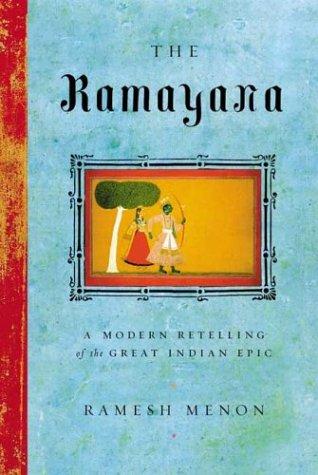
Valmiki · 400 BCE
Prince Rama is exiled, his wife Sita abducted by a demon king, and an army of monkeys and bears joins the war to win her back. One of the two great Sanskrit epics: its characters and moral vocabulary still alive across South and Southeast Asia today.
Vyasa · 300 BCE
Warring cousins drag an entire dynasty into catastrophic civil war, the narrative pausing along the way for the Bhagavad Gita's meditation on duty. The longest epic poem in world literature, and the source epic for most of Hindu philosophy's central texts.
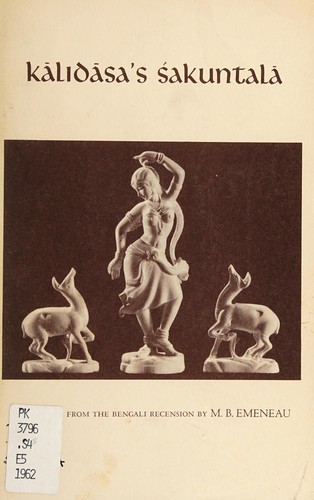
Kalidasa · 400 CE
A king falls for a hermitage girl, marries her in secret, then a sage's curse wipes her from his memory, leaving her to face his court alone. Classical Sanskrit drama's most celebrated play, the work that first won Kalidasa a European readership through Goethe's praise.