

Yu Hua
China
Deceptively plain and folkloric, repeating simple sentences like a fable: a calm that makes historical catastrophe land harder, not softer.
Yu Hua grew up in a small Zhejiang town where both parents worked at the local hospital, and spent his teenage years as a barefoot dentist, pulling teeth with minimal training for five years before deciding, he has said, that writers got to sleep in. He began publishing violent, formally experimental short fiction in the 1980s avant-garde scene before shifting toward the plain, folk-tale calm of his major novels.
To Live follows Fugui through civil war, famine, and the Cultural Revolution as he loses nearly everyone he loves, narrated with a flatness that makes the accumulating loss unbearable; Zhang Yimou's film adaptation was banned in China even as the novel became one of the country's most beloved exports. Chronicle of a Blood Merchant repeated the trick, following a man who sells his own blood again and again to keep his family alive.
Long banned or restricted at home for his bluntness about famine and political violence, he remains one of contemporary China's most internationally translated novelists.
Lines of influence
No descendants recorded, yet.
Their books in the atlas
- 1993
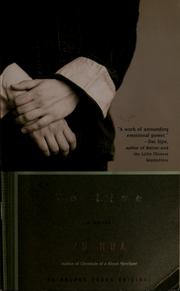 To LiveLvl 3historical fiction
 - 1995
 Chronicle of a Blood MerchantLvl 3historical fiction
Meanwhile, elsewhere
 b. 1954Kazuo IshiguroEngland / JapanWestern Europe · England / Japan
 b. 1940Annie ErnauxFranceWestern Europe · France
 b. 1948Ian McEwanEnglandWestern Europe · England
 b. 1946Julian BarnesEnglandWestern Europe · England
 b. 1953Herta MüllerGermany / RomaniaWestern Europe · Germany / Romania
If you like Hua, try
 1899–1966Lao SheChinashared movement: Modern Chinese Fiction · both shaped by Xun · kindred genres: historical fiction, tragedy
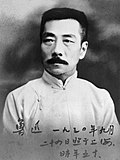 1881–1936Lu XunChinashaped Hua · shared movement: Modern Chinese Fiction · both write in Chinese
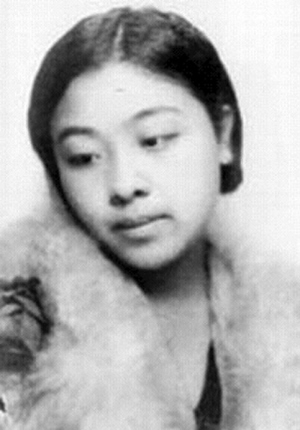 1904–1986Ding LingChinashared movement: Modern Chinese Fiction · both shaped by Xun · kindred genres: historical fiction
 1911–1942Xiao HongChinashared movement: Modern Chinese Fiction · both shaped by Xun · kindred genres: historical fiction, tragedy
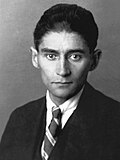 1883–1924Franz KafkaCzechia (Bohemia)shaped Hua
 1715–1763Cao XueqinChinakindred genres: tragedy · both write in Chinese · neighboring movements