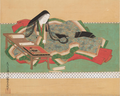
Heian Court Literature
Court women writing in vernacular Japanese invent psychological fiction half a millennium early.
At the Heian court, women were largely barred from Chinese, the language of official scholarship, and wrote instead in the vernacular, and in that supposedly lesser tongue produced the era's most enduring literature. Murasaki Shikibu's The Tale of Genji follows one nobleman's amorous, melancholy life and, after his death, the generation that succeeds him, tracking feeling and social nuance with a psychological precision no European narrative would match for centuries.
The novel's real innovation is mono no aware (the poignant, passing nature of things) as a structuring principle rather than a mood: seasons change, affairs end, beauty fades, and the narration simply registers it, without judgment. Sei Shōnagon's contemporaneous Pillow Book, a diarist's list-making eye turned on court life, shows the same sensibility working in miniature, proof this was a whole literary culture's achievement, not one genius's accident.
How to spot it on the page
- Mono no aware (the gentle sadness of transience) governing tone rather than plot
- Vernacular Japanese chosen deliberately over prestige Chinese, and claimed as literature anyway
- Poetry exchanged between characters as the era's primary form of courtship and confession
- A vast, shifting cast tracked across generations rather than one contained plot
- Interior feeling (jealousy, longing, regret) rendered with more precision than any external event
- Seasonal and natural imagery doing a scene's emotional work instead of exposition
What it left behind
The Heian court itself dissolved into the Kamakura shogunate's military age within two centuries, but Genji never left Japanese literary consciousness: annotated, illustrated, and rewritten continuously ever since, it stands as world literature's first sustained psychological novel. Its mono no aware sensibility resurfaces directly in Kawabata's negative-space prose and in any Japanese fiction that lets a scene's feeling outlast its incident.
Defining works
For a guided order with notes, follow the reading path →
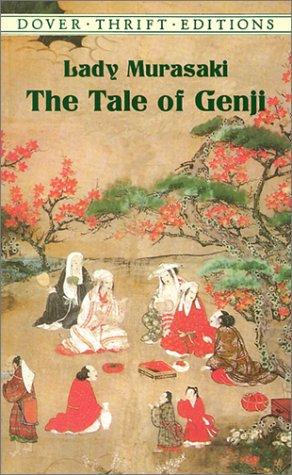
Murasaki Shikibu · 1010
A prince's decades of love affairs and political rise eventually give way to his descendants' more melancholic, diminished lives. Widely called the world's first novel: psychological interiority a thousand years before the form had a name for it.