
Persian & Arabic Classics
Ferdowsi's kings, Attar's birds, and Scheherazade's thousand nights build a shared golden-age imagination.
Ferdowsi spent three decades versifying the Shahnameh, a mythic history of Persian kingship from creation to the Islamic conquest, written partly to preserve the Persian language itself against Arabic's dominance after conquest: literature as an act of cultural survival. Around the same centuries, Baghdad's translation movement and courtly patronage made Arabic the era's great scholarly and literary lingua franca, and The Arabian Nights assembled its frame within a frame (Scheherazade telling stories to postpone her own execution) into a structure so elastic it could absorb tales from Persia, India, and Egypt alike.
Attar's The Conference of the Birds took the era's mysticism and made it narrative: thirty birds cross seven valleys seeking a mythical king and discover, in an untranslatable pun, that they themselves are what they sought. Between epic history, framed storytelling, and Sufi allegory, this is a golden age arguing simultaneously about kingship, survival, and the soul.
How to spot it on the page
- A frame narrative whose telling is itself a matter of life and death
- Kingship and dynasty tracked as a moral chronicle, not just political history
- Sufi allegory in which the literal quest and the spiritual quest are the same journey
- Tales absorbing and repurposing material from multiple conquered or neighboring cultures
- Verse and prose alternating within the same text
- Language itself treated as something worth fighting to preserve
What it left behind
Mongol invasion and shifting dynasties scattered the courts that had patronized this literature, but its texts never stopped traveling: The Arabian Nights entered European imagination through eighteenth-century translation and reshaped Western fantasy from the inside, while the Shahnameh remains the living reference point for Persian identity. Attar's birds still structure how Sufi allegory gets told, valley by valley, anywhere the tradition survives.
Defining works
For a guided order with notes, follow the reading path →
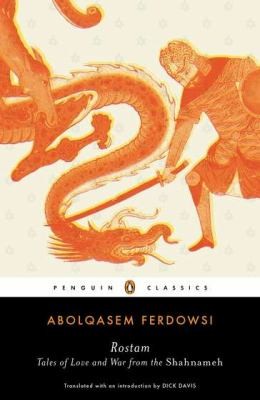
Abolqasem Ferdowsi · 1010
Fifty kings, mythic and historical, march through fifty thousand couplets of creation, conquest, and tragedy. Ferdowsi's epic single-handedly kept the Persian language alive under Arab rule, still the touchstone of Iranian identity.
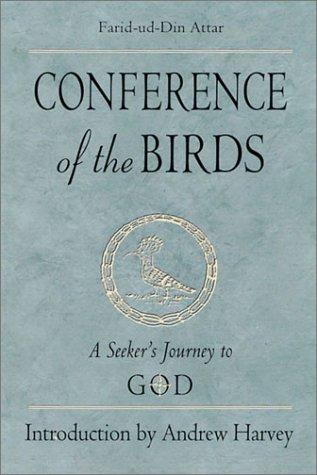
Farid ud-Din Attar · 1177
Thirty birds cross seven allegorical valleys in search of their king, the Simorgh, shedding everything false about themselves along the way. Persian Sufism's great narrative poem, still the clearest gateway into mystical allegory.

The Arabian Nights Compilers · 850 CE
Scheherazade spins one tale after another to postpone her execution, nesting Sinbad, genies, and princes inside a frame that defers its own ending. The most influential story collection in world literature, five centuries in the making.

