

Ivo Andrić
Yugoslavia / Bosnia
Measured and chronicle-paced, generations passing across a single fixed place with the patient inevitability of a historian who has already seen how it all ends.
Born in Travnik in 1892, Andrić was raised by relatives in Višegrad, on the Ottoman bridge over the Drina that would later anchor his best-known novel. As a student he joined the Young Bosnia movement linked to the plot against Archduke Franz Ferdinand, and though not implicated in the assassination itself, he spent much of the First World War interned by Austro-Hungarian authorities for his nationalist sympathies.
Between the wars he became a career Yugoslav diplomat, rising to ambassador in Nazi Berlin until Germany invaded Yugoslavia in 1941. He returned to occupied Belgrade and lived in near-total seclusion through the war years, producing three major novels in a single sustained burst: The Bridge on the Drina, Bosnian Chronicle, and The Woman from Sarajevo, all published together in 1945.
He won the Nobel Prize in Literature in 1961, the only Yugoslav writer ever to do so, and died in Belgrade in 1975, spared the wars that would tear apart the layered world his fiction had spent decades chronicling.
Their books in the atlas
- 1945
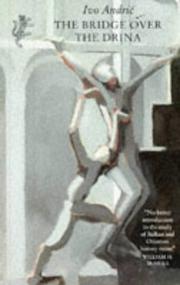 The Bridge on the DrinaLvl 4historical fiction
 - 1945
 Bosnian ChronicleLvl 4historical fiction
Meanwhile, elsewhere
 1890–1979Jean RhysUnited Kingdom / DominicaWestern Europe · United Kingdom / Dominica
 1892–1982Djuna BarnesUnited StatesNorth America · United States
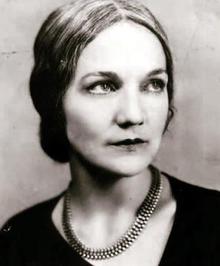 1890–1980Katherine Anne PorterUnited StatesNorth America · United States
 1891–1980Henry MillerUnited StatesNorth America · United States
 1891–1974Pär LagerkvistSwedenWestern Europe · Sweden
 1892–1973Pearl S. BuckUnited States / ChinaNorth America · United States / China
If you like Andrić, try
 1910–1982Meša SelimovićBosniakindred genres: historical fiction · both write in Serbo-Croatian · same region & era
 1905–1964Vasily GrossmanUkraine / Russiakindred genres: historical fiction, epic · same region & era
 1935–1989Danilo KišYugoslavia / Serbiakindred genres: historical fiction, political novel · both write in Serbo-Croatian · same region & era
 1905–1984Mikhail SholokhovRussiakindred genres: epic, historical fiction · same region & era
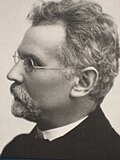 1847–1912Bolesław PrusPolandkindred genres: historical fiction, political novel · same region & era
 1893–1977Miloš CrnjanskiSerbiaboth write in Serbo-Croatian · same region & era