

Miloš Crnjanski
Serbia
Restless and lyrical, long rhythmic sentences that seem to keep marching even when the narrative stands still, homesickness written as a permanent physical state.
Born in 1893 in Csongrád to a Serbian family from Vojvodina, then part of Austria-Hungary, Crnjanski was conscripted into the Austro-Hungarian army in the First World War and wounded fighting on the Galician front, a loyalty turned against his own origins that shaped his lifelong preoccupation with displacement.
He became a leading voice of interwar Yugoslav literary modernism, and in the 1930s served as a diplomat and journalist for the Kingdom of Yugoslavia in Berlin and Rome, a posting that put him in uncomfortably close proximity to fascism and left a controversial mark on his political reputation. Migrations, following Serbian soldiers conscripted into Habsburg service across the eighteenth century, appeared in 1929 as his major early novel.
He fled to London after the German invasion of Yugoslavia in 1941 and spent nearly a quarter century there in genuine poverty, working ordinary jobs while continuing to write in near-total obscurity, before returning to Communist Yugoslavia in 1965. He died in Belgrade in 1977.
Their books in the atlas
- 1921The Journal of ČarnojevićThe Journal of ČarnojevićLvl 6war novel
- 1929
 MigrationsLvl 7modernist
Meanwhile, elsewhere
 1890–1979Jean RhysUnited Kingdom / DominicaWestern Europe · United Kingdom / Dominica
 1892–1982Djuna BarnesUnited StatesNorth America · United States
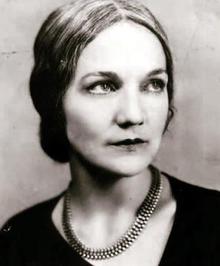 1890–1980Katherine Anne PorterUnited StatesNorth America · United States
 1891–1980Henry MillerUnited StatesNorth America · United States
 1891–1974Pär LagerkvistSwedenWestern Europe · Sweden
 1892–1973Pearl S. BuckUnited States / ChinaNorth America · United States / China
If you like Crnjanski, try
 1935–1989Danilo KišYugoslavia / Serbiakindred genres: historical fiction, modernist · both write in Serbo-Croatian · same region & era
 1890–1960Boris PasternakRussiakindred genres: war novel, historical fiction · same region & era
 1910–1982Meša SelimovićBosniaboth write in Serbo-Croatian · same region & era
 1892–1975Ivo AndrićYugoslavia / Bosniaboth write in Serbo-Croatian · same region & era
 1913–2005Claude SimonFrancekindred genres: modernist, war novel
 1899–1960Yuri OleshaUSSR (Ukraine)kindred genres: modernist · same region & era