

Boris Pasternak
Russia
Lyrical and sensuous even in prose, landscape and weather pressing into the narrative until history itself feels like something the natural world is doing to its characters.
The son of a painter and a concert pianist, Pasternak was already established as Russia's foremost living poet when he began Doctor Zhivago in his sixties, deliberately choosing a form more dangerous than verse. He survived the purges partly on Stalin's own unpredictable interest (colleagues who signed denunciations vanished; Pasternak, who mostly refused, did not), but the novel itself proved uncrossable.
Rejected by Soviet publishers, the manuscript was smuggled to Italy and published there in 1957; the Nobel committee's prize the following year triggered a state campaign that forced him to decline it and expelled him from the Writers' Union. He died of lung cancer in 1960, and the unannounced crowds that filled his funeral procession were, for many attendees, a quiet act of protest against the state that had hounded him.
Lines of influence
No descendants recorded, yet.
Their books in the atlas
- 1957
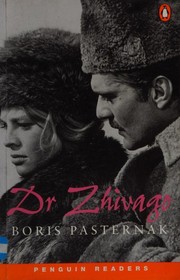 Doctor ZhivagoLvl 6historical fiction
Meanwhile, elsewhere
 1879–1970E. M. ForsterEnglandWestern Europe · England
 1890–1979Jean RhysUnited Kingdom / DominicaWestern Europe · United Kingdom / Dominica
 1877–1962Hermann HesseGermany / SwitzerlandWestern Europe · Germany / Switzerland
 1885–1970François MauriacFranceWestern Europe · France
 1885–1962Isak Dinesen (Karen Blixen)DenmarkWestern Europe · Denmark
 1888–1964Frans Eemil SillanpääFinlandWestern Europe · Finland
If you like Pasternak, try
 1905–1964Vasily GrossmanUkraine / Russiashared movement: The Soviet Century · both shaped by Tolstoy · kindred genres: historical fiction, war novel
 1905–1984Mikhail SholokhovRussiashared movement: The Soviet Century · both shaped by Tolstoy · kindred genres: historical fiction, war novel
 1918–2008Aleksandr SolzhenitsynRussiashared movement: The Soviet Century · both shaped by Tolstoy · kindred genres: historical fiction, war novel
 1828–1910Leo TolstoyRussiashaped Pasternak · both write in Russian · neighboring movements
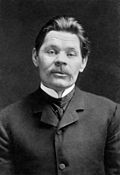 1868–1936Maxim GorkyRussiashared movement: The Soviet Century · both shaped by Tolstoy · both write in Russian
 1870–1953Ivan BuninRussiaboth shaped by Tolstoy · kindred genres: romance · both write in Russian