

André Gide
France
Cool, confessional, and morally exacting: a narrator examining his own desires with the same rigor he'd apply to someone else's crime.
Gide grew up under his widowed Protestant mother's strict moral watch, then spent his adult life systematically dismantling it, marrying his cousin Madeleine in a marriage most historians believe was never consummated, while pursuing relationships with young men on trips to North Africa that he later described candidly in Corydon and the autobiography If It Die. In 1908 he co-founded the Nouvelle Revue Française, which became France's most influential literary journal and publishing house; he initially rejected Proust's Swann's Way for it, a decision he called his life's greatest editorial regret.
A visit to the Soviet Union in 1936 turned him from a fellow traveler into one of the Communist left's most damaging early critics, after Return from the USSR detailed what he'd actually seen. He won the Nobel Prize in 1947 and died in Paris in 1951.
Lines of influence
No descendants recorded, yet.
Their books in the atlas
- 1902
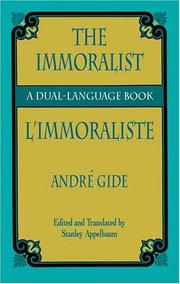 The ImmoralistLvl 5philosophical novel
 - 1909
 Strait Is the GateLvl 5romance
Meanwhile, elsewhere
 1870–1953Ivan BuninRussiaRussia & Eastern Europe · Russia
 1873–1952Mariano AzuelaMexicoLatin America · Mexico
 1873–1947Willa CatherUnited StatesNorth America · United States
 1871–1945Theodore DreiserUnited StatesNorth America · United States
 1878–1968Upton SinclairUnited StatesNorth America · United States
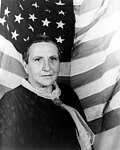 1874–1946Gertrude SteinUnited StatesNorth America · United States
If you like Gide, try
 1848–1907Joris-Karl HuysmansFranceinfluence, once removed · kindred genres: philosophical novel, psychological novel · both write in French
 1854–1900Oscar WildeIrelandshaped Gide · neighboring movements · same region & era
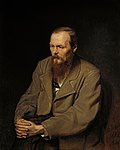 1821–1881Fyodor DostoevskyRussiashaped Gide · kindred genres: psychological novel, philosophical novel · neighboring movements
 1871–1922Marcel ProustFranceshared movement: High Modernism · kindred genres: psychological novel, philosophical novel · both write in French
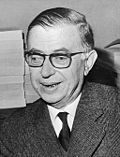 1905–1980Jean-Paul SartreFranceboth shaped by Dostoevsky · kindred genres: philosophical novel · both write in French
 1877–1962Hermann HesseGermany / Switzerlandshared movement: High Modernism · kindred genres: philosophical novel, psychological novel · same region & era