
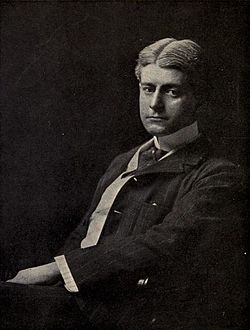
Frank Norris
United States
Heavy, deterministic prose that treats human beings as animals driven by heredity and appetite, description piling up like inexorable natural law.
Norris was raised in San Francisco after a Chicago childhood, studied painting in Paris, and passed through both the University of California and Harvard without taking a degree, absorbed instead in the naturalist theories of Émile Zola. He worked as a war correspondent in South Africa during the Boer War and in Cuba during the Spanish-American War, where he contracted the malaria and rheumatic fever that weakened him permanently.
McTeague, his best-known novel, applied Zola's deterministic vision of heredity and environment to a San Francisco dentist's descent into violence. He then began an ambitious Trilogy of the Wheat, tracing grain from a California ranch to Chicago speculation to a starving Europe; only The Octopus and The Pit were completed before his death.
He died in San Francisco in 1902 of complications from a ruptured appendix, at thirty-two, leaving the trilogy's third volume never written.
Lines of influence
No descendants recorded, yet.
Their books in the atlas
- 1899
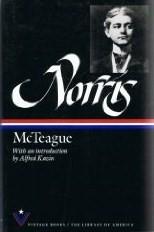 McTeagueLvl 5psychological novel
 - 1901
 The Octopus: A Story of CaliforniaLvl 5political novel
Meanwhile, elsewhere
 1848–1907Joris-Karl HuysmansFranceWestern Europe · France
 1857–1924Joseph ConradPoland / EnglandWestern Europe · Poland / England
 1869–1951André GideFranceWestern Europe · France
 1859–1952Knut HamsunNorwayWestern Europe · Norway
 1847–1912Bram StokerIrelandWestern Europe · Ireland
 1828–1905Jules VerneFranceWestern Europe · France
If you like Norris, try
 1840–1902Émile ZolaFranceshaped Norris · shared movement: Naturalism · kindred genres: psychological novel, political novel
 1871–1945Theodore DreiserUnited Statesshared movement: Naturalism · both shaped by Zola · kindred genres: psychological novel
 1878–1968Upton SinclairUnited Statesshared movement: Naturalism · both shaped by Zola · kindred genres: political novel
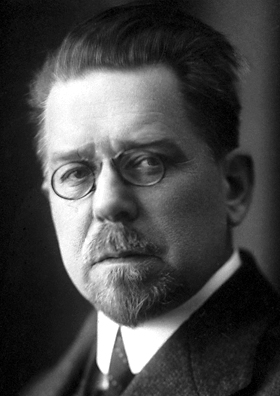 1867–1925Władysław ReymontPolandshared movement: Naturalism · both shaped by Zola · kindred genres: epic1848–1907Joris-Karl HuysmansFranceboth shaped by Zola · kindred genres: psychological novel · neighboring movements
 1821–1880Gustave FlaubertFranceinfluence, once removed · kindred genres: psychological novel · neighboring movements