

Premchand
India
Plain-spoken and compassionate, close to the rhythms of village speech; realism that indicts a whole social order without ever raising its voice.
Born Dhanpat Rai in a village near Varanasi, Premchand lost his mother young, worked as a schoolteacher and minor education official under British rule, and wrote his early fiction in Urdu before switching to Hindi to reach a wider readership. Colonial authorities banned and burned his first story collection, Soz-e-Watan, for its nationalist sympathies in 1910, ending his position as a government inspector.
He edited literary journals, ran a small and financially ruinous printing press, and wrote hundreds of short stories and more than a dozen novels depicting peasants, moneylenders, and the machinery of rural debt with unusual tenderness for a genre then dominated by romance and fantasy. Godan (1936), his last completed novel, follows a peasant's lifelong wish to own a single cow, crushed by loans, custom, and caste obligation.
He died later that same year, having effectively founded socially conscious realism in Hindi-Urdu fiction.
Lines of influence
No ancestors recorded: a headwater.
Their books in the atlas
- 1924The Chess PlayersThe Chess PlayersLvl 3satire
- 1927
 NirmalaLvl 3family saga
 - 1931
 GabanLvl 3psychological novel
 - 1936
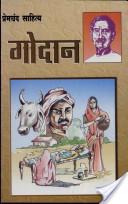 GodanLvl 3family saga
Meanwhile, elsewhere
 1875–1955Thomas MannGermanyWestern Europe · Germany
 1880–1942Robert MusilAustriaWestern Europe · Austria
 1873–1954ColetteFranceWestern Europe · France
 1869–1951André GideFranceWestern Europe · France
 1879–1970E. M. ForsterEnglandWestern Europe · England
 1877–1962Hermann HesseGermany / SwitzerlandWestern Europe · Germany / Switzerland
If you like Premchand, try
 1926–2016Mahasweta DeviIndiashaped by Premchand · kindred genres: tragedy, political novel · neighboring movements
 1912–1955Saadat Hasan MantoPakistan / Indiashared movement: The Progressive Writers' Movement · kindred genres: crime & noir, satire · same region & era
 1911–1991Ismat ChughtaiIndiashared movement: The Progressive Writers' Movement · same region & era
 1861–1941Rabindranath TagoreIndia (Bengal)kindred genres: family saga, political novel · neighboring movements · same region & era
 1906–2001R. K. NarayanIndiakindred genres: tragedy, short story collection · neighboring movements · same region & era
 1905–2004Mulk Raj AnandIndiakindred genres: tragedy, political novel · neighboring movements · same region & era