

Giovanni Verga
Italy
Flat, choral, almost anthropological restraint: a narrator who refuses to editorialize, letting poverty and fate speak for themselves in the villagers' own cadences.
Verga spent his early career in Florence and Milan writing fashionable society romances for a genteel urban readership, chasing the literary success of the day. It was only in his forties, turning back to the Sicilian fishing villages of his childhood and absorbing Zola's naturalism, that he found the terse, dialect-inflected voice that made his reputation.
The House by the Medlar Tree (1881) was meant as the first of a five-novel cycle called 'I Vinti,' 'The Defeated,' tracing failure up through Sicilian society; he completed only two. Cavalleria Rusticana, a story about a fatal duel over a woman, became Mascagni's famous opera in 1890, a success that entangled Verga in years of royalty disputes.
Made a senator late in life, he died in Catania, his home city, in 1922.
Lines of influence
Their books in the atlas
- 1880
 Cavalleria RusticanaLvl 5short story collection
 - 1881
 The House by the Medlar TreeLvl 6family saga
Meanwhile, elsewhere
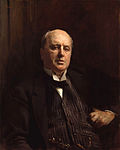 1843–1916Henry JamesUSA / EnglandNorth America · USA / England
 1828–1910Leo TolstoyRussiaRussia & Eastern Europe · Russia
 1846–1916Henryk SienkiewiczPolandRussia & Eastern Europe · Poland
 1835–1910Mark TwainUSANorth America · USA
 1839–1908Machado de AssisBrazilLatin America · Brazil
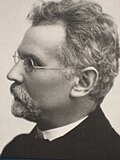 1847–1912Bolesław PrusPolandRussia & Eastern Europe · Poland
If you like Verga, try
 1871–1936Grazia DeleddaItalyshaped by Verga · shared movement: Italian Realism & Verismo · kindred genres: tragedy, family saga
 1840–1902Émile ZolaFranceshaped Verga · kindred genres: tragedy · same region & era
 1861–1928Italo SvevoItalyboth shaped by Zola · kindred genres: tragedy · both write in Italian
 1845–1900Eça de QueirósPortugalboth shaped by Zola · kindred genres: tragedy, family saga · same region & era
 1867–1936Luigi PirandelloItalyshared movement: Italian Realism & Verismo · both write in Italian · same region & era
 1785–1873Alessandro ManzoniItalyshared movement: Italian Realism & Verismo · both write in Italian · same region & era