

Eça de Queirós
Portugal
Elegant, ironic, and cosmopolitan: Flaubertian precision turned on Lisbon drawing rooms, every social nicety quietly exposed as performance.
Born outside marriage and only later legally recognized by his father, Eça trained as a lawyer before entering the Portuguese diplomatic service, serving as consul in Havana, Newcastle, and Bristol before settling permanently in Paris. Distance from Lisbon sharpened rather than dulled his eye for its hypocrisies: he was a founding figure of the 'Geração de 70,' a circle of intellectuals pushing Portugal to modernize.
The Crime of Father Amaro (1875), a scandalous debut about a priest's affair, announced naturalism's arrival in Portuguese letters; The Maias (1888), his masterpiece, applied the same unsparing irony to a wealthy Lisbon family's slow-motion collapse across generations.
He died in Neuilly, near Paris, in 1900, having spent more of his adult life abroad than at home.
Lines of influence
No descendants recorded, yet.
Their books in the atlas
- 1875
 The Crime of Father AmaroLvl 5satire
 - 1888
 The MaiasLvl 6family saga
Meanwhile, elsewhere
 1828–1910Leo TolstoyRussiaRussia & Eastern Europe · Russia
 1835–1910Mark TwainUSANorth America · USA
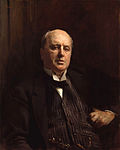 1843–1916Henry JamesUSA / EnglandNorth America · USA / England
 1839–1908Machado de AssisBrazilLatin America · Brazil
 1846–1916Henryk SienkiewiczPolandRussia & Eastern Europe · Poland
 1847–1912Bolesław PrusPolandRussia & Eastern Europe · Poland
If you like Queirós, try
 1840–1902Émile ZolaFranceshaped Queirós · shared movement: Naturalism · kindred genres: tragedy
 1871–1900Stephen CraneUnited Statesshared movement: Naturalism · both shaped by Zola · kindred genres: tragedy, family saga
 1871–1945Theodore DreiserUnited Statesshared movement: Naturalism · both shaped by Zola · kindred genres: tragedy
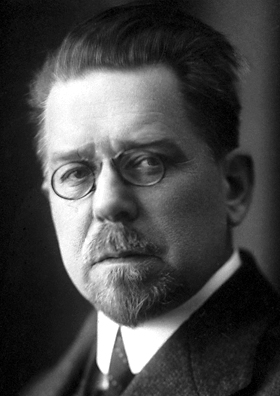 1867–1925Władysław ReymontPolandshared movement: Naturalism · both shaped by Zola · kindred genres: family saga
 1840–1922Giovanni VergaItalyboth shaped by Zola · kindred genres: tragedy, family saga · same region & era
 1799–1850Honoré de BalzacFranceinfluence, once removed · kindred genres: family saga, tragedy · neighboring movements