

Stephen Crane
United States
Terse, impressionistic prose that renders fear and chaos through fragmented color and sensation rather than continuous narration.
The fourteenth child of a Methodist minister, Crane left college without a degree and worked as a journalist in New York's slums, self-publishing Maggie: A Girl of the Streets under a pseudonym in 1893 after no one would touch its subject. The Red Badge of Courage, written from imagination and interviews with veterans rather than firsthand combat, made him internationally famous when it appeared in 1895.
He then went looking for war himself, surviving the sinking of a gunrunning ship off Florida in 1897 (an ordeal that produced the story 'The Open Boat') before covering the Greco-Turkish and Spanish-American Wars as a correspondent. He settled in England with Cora Taylor, a hotel proprietor he never formally married, and became close friends with Joseph Conrad and Henry James.
Chronic tuberculosis, worsened by his wartime exposure, killed him in a German sanatorium in 1900, at twenty-eight.
Lines of influence
Their books in the atlas
- 1893
 Maggie: A Girl of the StreetsLvl 4family saga
 - 1895
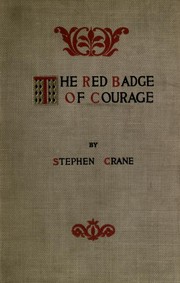 The Red Badge of CourageLvl 5war novel
Meanwhile, elsewhere
 1848–1907Joris-Karl HuysmansFranceWestern Europe · France
 1854–1900Oscar WildeIrelandWestern Europe · Ireland
 1857–1924Joseph ConradPoland / EnglandWestern Europe · Poland / England
 1871–1922Marcel ProustFranceWestern Europe · France
 1869–1951André GideFranceWestern Europe · France
 1859–1952Knut HamsunNorwayWestern Europe · Norway
If you like Crane, try
 1871–1945Theodore DreiserUnited Statesshaped by Crane · shared movement: Naturalism · both shaped by Zola
 1840–1902Émile ZolaFranceshaped Crane · shared movement: Naturalism · both shaped Dreiser
 1845–1900Eça de QueirósPortugalshared movement: Naturalism · both shaped by Zola · kindred genres: tragedy, family saga
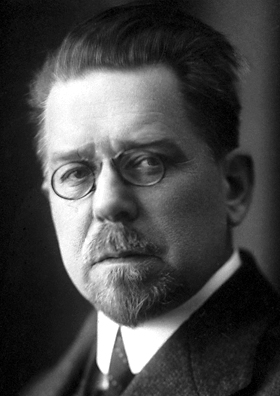 1867–1925Władysław ReymontPolandshared movement: Naturalism · both shaped by Zola · kindred genres: family saga
 1799–1850Honoré de BalzacFranceinfluence, once removed · kindred genres: family saga, tragedy · neighboring movements
 1840–1922Giovanni VergaItalyboth shaped by Zola · kindred genres: tragedy, family saga