

Richard Yates
USA
Plain, exact, and merciless: realist prose that lets ordinary self-delusion destroy a marriage in scenes so precisely observed there's nowhere left to hide.
Yates grew up in a fractured, downwardly mobile family around Yonkers and New York City, was discharged from the army after a bout of pneumonia that scarred his lungs, and spent his twenties and thirties grinding out corporate speeches and freelance journalism while chipping away at fiction, all while wrestling with the alcoholism and manic depression that would hospitalize him repeatedly.
Revolutionary Road, a finalist for the National Book Award it lost to Walker Percy's The Moviegoer, dissected a young Connecticut couple's suburban marriage as it curdles under their shared conviction that they're too special for the ordinary life they've built: a diagnosis so exact that Kurt Vonnegut and Tennessee Williams both called it a masterpiece even as it sold poorly.
He supported himself for decades teaching creative writing, in and out of psychiatric wards, drinking heavily, largely out of print by the time he died in 1992. A wave of reissues and a 2008 film adaptation later restored him to the center of American realism, an influence Richard Ford and others had quietly credited all along.
Lines of influence
No descendants recorded, yet.
Their books in the atlas
- 1961
 Revolutionary RoadLvl 4tragedy
Meanwhile, elsewhere
 1914–1996Marguerite DurasFrance / VietnamWestern Europe · France / Vietnam
 1922–2008Alain Robbe-GrilletFranceWestern Europe · France
 1922–2010José SaramagoPortugalWestern Europe · Portugal
 1916–2002Camilo José CelaSpainWestern Europe · Spain
 1919–1999Iris MurdochIreland / EnglandWestern Europe · Ireland / England
 1918–2006Muriel SparkScotlandWestern Europe · Scotland
If you like Yates, try
 1896–1940F. Scott FitzgeraldUSAshaped Yates · kindred genres: psychological novel, tragedy · same region & era
 1860–1904Anton ChekhovRussiashaped Yates · kindred genres: tragedy, psychological novel
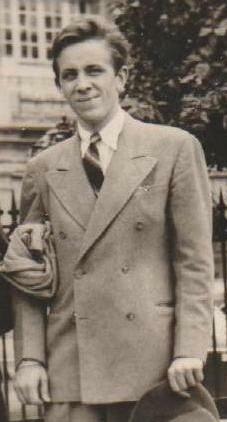 1917–1994Peter TaylorUSAboth shaped by Chekhov · kindred genres: family saga, psychological novel · same region & era1928–2016William TrevorIrelandboth shaped by Chekhov · kindred genres: family saga, tragedy
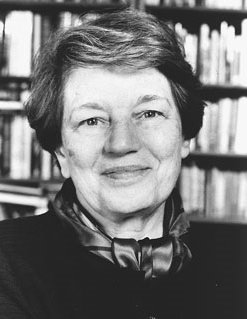 1922–2014Mavis GallantCanadaboth shaped by Chekhov · kindred genres: psychological novel · same region & era
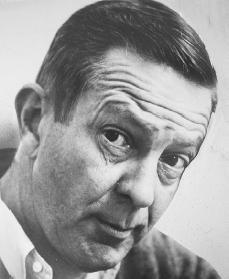 1912–1982John CheeverUnited Statesboth shaped by Chekhov · kindred genres: family saga · same region & era