

Anton Chekhov
Russia
Spare and understated, scenes ending mid-gesture rather than at a resolution, so ordinary disappointment lands with the weight of tragedy without ever announcing itself as one.
Chekhov's father went bankrupt and fled to Moscow to escape debtors' prison, leaving teenage Anton to sell the family's possessions and finish school alone in Taganrog. He paid his way through medical school writing comic sketches for magazines under joke pen names, then practiced medicine, often for free among the rural poor, while his stories quietly outgrew the market that had first paid for them.
In 1890 he made an arduous journey across Siberia to the Sakhalin penal colony to document the conditions of exiled convicts, a reporting trip that hardened his sense of plain, unsentimental observation. Tuberculosis, which he diagnosed in himself years before admitting it, finally killed him in a German spa town in 1904, not long after his late marriage to the actress Olga Knipper.
Lines of influence
Their books in the atlas
- 1892
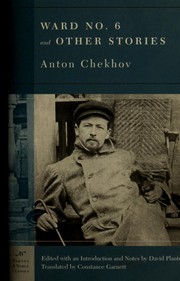 Ward No. 6Lvl 4psychological novel
 - 1896
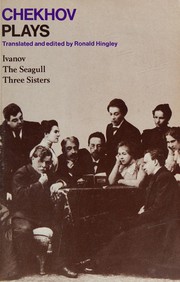 The SeagullLvl 4drama
 - 1897
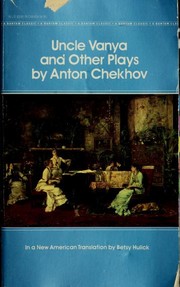 Uncle VanyaLvl 4drama
 - 1899
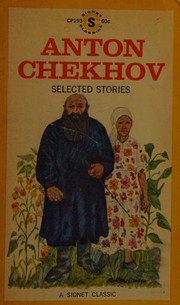 Selected StoriesLvl 4short story collection
 - 1901
 Three SistersLvl 4drama
 - 1904
 The Cherry OrchardLvl 4drama
Meanwhile, elsewhere
 1848–1907Joris-Karl HuysmansFranceWestern Europe · France
 1840–1928Thomas HardyEnglandWestern Europe · England
 1857–1924Joseph ConradPoland / EnglandWestern Europe · Poland / England
 1859–1952Knut HamsunNorwayWestern Europe · Norway
 1847–1912Bram StokerIrelandWestern Europe · Ireland
 1828–1905Jules VerneFranceWestern Europe · France
If you like Chekhov, try
 1828–1910Leo TolstoyRussiashaped Chekhov · shared movement: The Russian Golden Age · both shaped Grossman
 1870–1953Ivan BuninRussiashaped by Chekhov · both shaped by Tolstoy · both write in Russian
 1905–1964Vasily GrossmanUkraine / Russiashaped by Chekhov · both shaped by Tolstoy · both write in Russian
 1894–1940Isaac BabelRussia / Ukraineshaped by Chekhov · both write in Russian · neighboring movements
 1809–1852Nikolai GogolUkraine / Russiashared movement: The Russian Golden Age · both shaped Babel · kindred genres: short story collection, comedy1928–2016William TrevorIrelandshaped by Chekhov · both shaped Li · kindred genres: tragedy