

Stefan Zweig
Austria
Elegant, propulsive narration that tightens around a single fixation until the pressure becomes unbearable: psychological suspense built from restraint rather than event.
Zweig grew up in an assimilated, wealthy Viennese Jewish family, moved easily among Rilke, Freud, and Romain Rolland, and became, by the 1920s, one of the most translated writers alive: a virtuoso of the novella who found whole tragedies in a single overheated hour, a chance encounter, a hidden letter, an unbearable secret.
He fled Austria after the Anschluss, first to London, then to New York and finally Brazil, watching the Europe he'd loved dismantled from exile. Beware of Pity (1939), his only finished novel, follows an officer's well-meaning kindness toward a paralyzed girl curdling into catastrophe: pity as its own kind of cruelty.
Chess Story, written in his final months in Petrópolis, pits an obsessive world champion against a man who kept his sanity in Gestapo custody by replaying grandmaster games in his mind. Weeks after finishing it, in February 1942, despairing of Europe's future, Zweig and his wife Lotte took their own lives.
Lines of influence
No descendants recorded, yet.
Their books in the atlas
- 1939
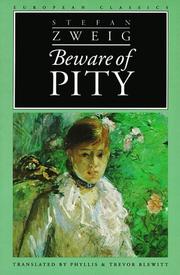 Beware of PityLvl 4psychological novel
 - 1942
 Chess StoryLvl 4psychological novel
Meanwhile, elsewhere
 1870–1953Ivan BuninRussiaRussia & Eastern Europe · Russia
 1873–1947Willa CatherUnited StatesNorth America · United States
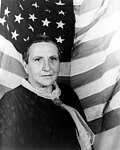 1874–1946Gertrude SteinUnited StatesNorth America · United States
 1871–1945Theodore DreiserUnited StatesNorth America · United States
 1878–1968Upton SinclairUnited StatesNorth America · United States
 1873–1952Mariano AzuelaMexicoLatin America · Mexico
If you like Zweig, try
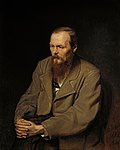 1821–1881Fyodor DostoevskyRussiashaped Zweig · kindred genres: psychological novel, tragedy · neighboring movements
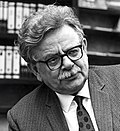 1905–1994Elias CanettiBulgaria / UKshared movement: Mitteleuropa · kindred genres: psychological novel, tragedy · both write in German
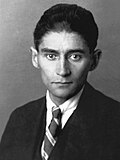 1883–1924Franz KafkaCzechia (Bohemia)shared movement: Mitteleuropa · both shaped by Dostoevsky · both write in German
 b. 1938Joyce Carol OatesUnited Statesboth shaped by Dostoevsky · kindred genres: psychological novel, tragedy · neighboring movements
 1894–1939Joseph RothAustria (Galicia)shared movement: Mitteleuropa · kindred genres: tragedy · both write in German
 1880–1942Robert MusilAustriashared movement: Mitteleuropa · both write in German · same region & era