

Albert Camus
Algeria / France
Sun-bleached and clipped, short declarative sentences holding indifference and lucidity in the same flat, glaring light.
Camus grew up poor in colonial Algeria, raised by an illiterate, half-deaf mother after his father died in the first weeks of the First World War. Tuberculosis at seventeen ended both his football career and any illusion of unlimited time; he took to journalism instead, and during the Nazi occupation edited the underground Resistance paper Combat.
The Stranger and The Myth of Sisyphus, both 1942, launched his philosophy of the absurd; The Plague (1947) allegorized the occupation as epidemic. A public rupture with Jean-Paul Sartre in 1952, over Camus's refusal to excuse Soviet terror, split French intellectual life for years. He won the Nobel Prize in 1957 at forty-four, one of its youngest recipients, and died three years later in a car crash: a return train ticket, unused, found in his pocket.
Lines of influence
Their books in the atlas
- 1942
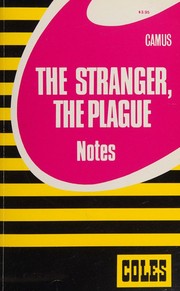 The StrangerLvl 3existentialist
 - 1942
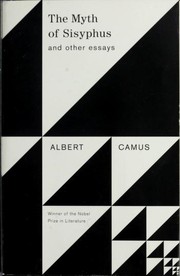 The Myth of SisyphusLvl 7essay
 - 1947
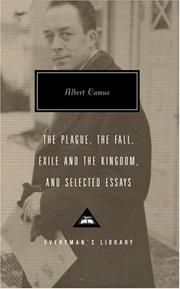 The PlagueLvl 4existentialist
 - 1956The FallLvl 6existentialist
- 1971
 A Happy DeathLvl 4existentialist
Meanwhile, elsewhere
 1899–1977Vladimir NabokovRussia / USARussia & Eastern Europe · Russia / USA
 1890–1960Boris PasternakRussiaRussia & Eastern Europe · Russia
 1905–1964Vasily GrossmanUkraine / RussiaRussia & Eastern Europe · Ukraine / Russia
 1905–1984Mikhail SholokhovRussiaRussia & Eastern Europe · Russia
 1907–1982Varlam ShalamovRussiaRussia & Eastern Europe · Russia
 1904–1969Witold GombrowiczPolandRussia & Eastern Europe · Poland
If you like Camus, try
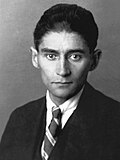 1883–1924Franz KafkaCzechia (Bohemia)shaped Camus · both shaped by Dostoevsky · kindred genres: existentialist, psychological novel
 1911–1991Max FrischSwitzerlandshaped by Camus · shared movement: Existentialism & the Absurd · kindred genres: existentialist, psychological novel
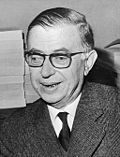 1905–1980Jean-Paul SartreFranceshared movement: Existentialism & the Absurd · both shaped by Dostoevsky · kindred genres: existentialist, philosophical novel
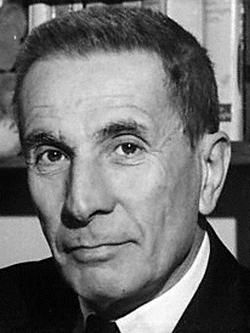 1906–1972Dino BuzzatiItalyshared movement: Existentialism & the Absurd · both shaped by Kafka · kindred genres: existentialist, philosophical novel
 1908–1986Simone de BeauvoirFranceshared movement: Existentialism & the Absurd · kindred genres: existentialist, psychological novel · both write in French
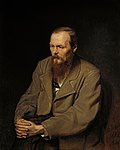 1821–1881Fyodor DostoevskyRussiashaped Camus · kindred genres: psychological novel, existentialist · neighboring movements