

Pramoedya Ananta Toer
Indonesia
Plain, driving realism charged with moral urgency: colonial cruelty and youthful awakening rendered in the cadence of a story told aloud, from memory, to survive.
Pramoedya fought in Indonesia's revolution against the returning Dutch, was imprisoned by them for two years, and began a writing career soon after independence that made him the country's most prominent novelist and, later, its most persecuted. The 1965 anti-communist purges swept him into custody without trial or charge, and he spent fourteen years imprisoned, most of it on the penal island of Buru.
Denied pen and paper for years, he composed the Buru Quartet's four novels orally, reciting them to fellow prisoners before finally being allowed to write them down. This Earth of Mankind, the first volume, follows Minke, a brilliant young Javanese student, awakening to Dutch colonial racism through his love for a plantation concubine's clever, defiant daughter; Child of All Nations continues his political education.
Released in 1979 but kept under city arrest for years after and banned in Indonesia until Suharto's fall, Pramoedya was repeatedly floated for the Nobel Prize before his death in Jakarta in 2006.
Lines of influence
No descendants recorded, yet.
Their books in the atlas
- 1980
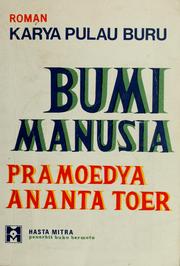 This Earth of MankindLvl 4colonial & postcolonial
 - 1980
 Child of All NationsLvl 4colonial & postcolonial
Meanwhile, elsewhere
 1922–2008Alain Robbe-GrilletFranceWestern Europe · France
 1922–2010José SaramagoPortugalWestern Europe · Portugal
 1918–2006Muriel SparkScotlandWestern Europe · Scotland
 1919–2013Doris LessingUnited Kingdom / ZimbabweWestern Europe · United Kingdom / Zimbabwe
 1923–2006Gerard ReveNetherlandsWestern Europe · Netherlands
 1918–2008Aleksandr SolzhenitsynRussiaRussia & Eastern Europe · Russia
If you like Toer, try
 b. 1948Abdulrazak GurnahTanzania / UKshared movement: Postcolonial Literatures · kindred genres: colonial & postcolonial, historical fiction
 1820–1887MultatuliNetherlandsshaped Toer · kindred genres: colonial & postcolonial, political novel
 1905–2004Mulk Raj AnandIndiashared movement: Postcolonial Literatures · kindred genres: colonial & postcolonial, bildungsroman1956–2019Andrea LevyEnglandshared movement: Postcolonial Literatures · kindred genres: colonial & postcolonial, historical fiction
 b. 1938Ngũgĩ wa Thiong'oKenyashared movement: Postcolonial Literatures · kindred genres: colonial & postcolonial, political novel
 1930–2012Barry UnsworthEnglandkindred genres: colonial & postcolonial, historical fiction · neighboring movements