

Nikos Kazantzakis
Greece
Long, incantatory sentences that yoke earthy appetite to metaphysical yearning: the body and the soul arguing on every page.
Kazantzakis studied law in Athens and philosophy in Paris under Bergson, then spent decades restlessly chasing successive obsessions (Buddhism, Marxism-Leninism, Christian asceticism) across travels through Russia, China, Japan, and Egypt, translating Dante, Goethe, and Darwin into Greek along the way.
Zorba the Greek (1946), his most beloved book, grew from a real failed lignite-mining venture in the Mani and the earthy, dancing, life-devouring foreman who ran it: a foil for the bookish narrator's own timid asceticism. He capped decades of Homeric obsession with a 33,333-line modern sequel to the Odyssey, the project he considered his true life's work.
The Last Temptation of Christ (1955) drew a Vatican ban and an Orthodox excommunication threat for imagining Christ tempted by an ordinary domestic life; Kazantzakis died in Germany in 1957 and was buried, denied consecrated ground, on Heraklion's old Venetian walls, under an epitaph of his own choosing: 'I hope for nothing. I fear nothing. I am free.'
Lines of influence
No descendants recorded, yet.
Their books in the atlas
- 1946
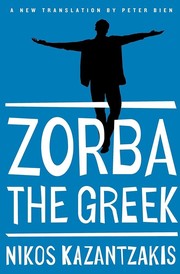 Zorba the GreekLvl 5philosophical novel
 - 1953
 Freedom or DeathLvl 6historical fiction
 - 1955
 The Last Temptation of ChristLvl 6philosophical novel
 - 1961
 Report to GrecoLvl 6autobiographical fiction
Meanwhile, elsewhere
 1878–1968Upton SinclairUnited StatesNorth America · United States
 1884–1969Rómulo GallegosVenezuelaLatin America · Venezuela
 1884–1964Halide Edip AdıvarTurkeyMiddle East · Turkey
 1886–1965Jun'ichirō TanizakiJapanEast Asia · Japan
 1870–1953Ivan BuninRussiaRussia & Eastern Europe · Russia
 1887–1970S. Y. AgnonUkraine (Galicia) / IsraelMiddle East · Ukraine (Galicia) / Israel
If you like Kazantzakis, try
 1864–1936Miguel de UnamunoSpainboth shaped by Dostoevsky · kindred genres: philosophical novel, existentialist · same region & era
 1905–1980Jean-Paul SartreFranceboth shaped by Dostoevsky · kindred genres: philosophical novel, existentialist · same region & era
 1869–1951André GideFranceboth shaped by Dostoevsky · kindred genres: philosophical novel · same region & era
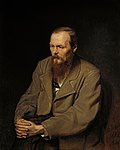 1821–1881Fyodor DostoevskyRussiashaped Kazantzakis
 750–700 BCEHomerAncient Greeceshaped Kazantzakis
 1913–1960Albert CamusAlgeria / Franceboth shaped by Dostoevsky · kindred genres: existentialist, autobiographical fiction · same region & era