
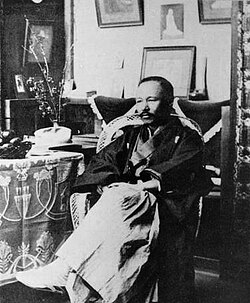
Ōgai Mori
Japan
Restrained and classically balanced, holding strong feeling at arm's length: desire observed with the same precision he brought to medicine.
Born Mori Rintarō into a family of hereditary domain physicians, he trained in medicine and was sent by the Army to Germany for four years of study in the 1880s: a formative, heartbroken stint later fictionalized in The Dancing Girl, his story of an affair with a German woman he ultimately abandoned for duty. He rose to Surgeon General, the Japanese Army's highest medical rank.
That authority carried a dark cost: Mori's stubborn insistence that beriberi was bacterial rather than nutritional, against mounting evidence, contributed to tens of thousands of military deaths from the disease during the Russo-Japanese War. Alongside his medical career he translated Goethe, Ibsen, and Andersen into Japanese and wrote fiction of his own, including The Wild Goose, a quietly unconsummated love story, and later austere historical novels.
He died in 1922 of tuberculosis and kidney disease, having left instructions that his gravestone bear only his given name, stripped of every official rank he had spent a lifetime earning.
Their books in the atlas
- 1890
 The Dancing GirlLvl 4autobiographical fiction
 - 1911
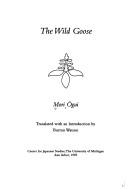 The Wild GooseLvl 3romance
Meanwhile, elsewhere
 1840–1928Thomas HardyEnglandWestern Europe · England
 1857–1924Joseph ConradPoland / EnglandWestern Europe · Poland / England
 1859–1952Knut HamsunNorwayWestern Europe · Norway
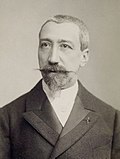 1844–1924Anatole FranceFranceWestern Europe · France
 1840–1922Giovanni VergaItalyWestern Europe · Italy
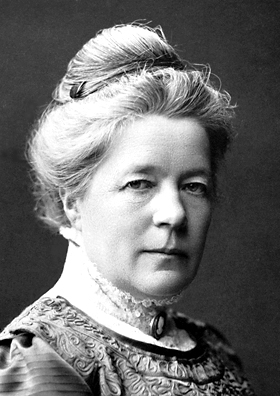 1858–1940Selma LagerlöfSwedenWestern Europe · Sweden
If you like Mori, try
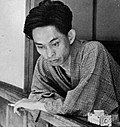 1899–1972Yasunari KawabataJapanshared movement: Japanese Modernism & Aesthetics · kindred genres: psychological novel, tragedy · both write in Japanese
 1867–1916Natsume SōsekiJapanshared movement: Japanese Modernism & Aesthetics · both write in Japanese · same region & era
 1886–1965Jun'ichirō TanizakiJapanshared movement: Japanese Modernism & Aesthetics · both write in Japanese · same region & era
 1892–1927Ryūnosuke AkutagawaJapanshared movement: Japanese Modernism & Aesthetics · both write in Japanese · same region & era
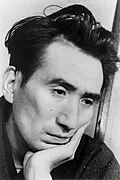 1909–1948Osamu DazaiJapankindred genres: autobiographical fiction, psychological novel · both write in Japanese · neighboring movements
 1925–1970Yukio MishimaJapankindred genres: psychological novel, tragedy · both write in Japanese · neighboring movements