Foundational Latin American Realism
Before the Boom, the novela de la tierra maps land, revolution, and rural power.
Decades before García Márquez, Latin American novelists were already writing the continent's landscape as destiny: the novela de la tierra, where jungle, plain, and hacienda are as much characters as any person. Gallegos's Doña Bárbara makes the Venezuelan llanos a battleground between civilization and barbarism; Güiraldes's Don Segundo Sombra elegizes the vanishing gaucho.
Mariano Azuela's The Underdogs, written amid the actual fighting, gave the Mexican Revolution its first great novel: chaotic, disillusioned, unheroic. This generation established the ambition the Boom would later inherit: that Latin American fiction had to reckon with the land and the violence of its own history before it could do anything else.
How to spot it on the page
- Jungle, plain, or hacienda described with the weight and agency of a character
- Civilization and barbarism staged as a literal frontier battle across the land itself
- A vanishing rural figure (the gaucho, the peasant soldier) elegized as the nation modernizes past him
- Revolution and war rendered as lived chaos, without a redeeming heroic arc
- Regional dialect and folk song embedded directly in the narrative voice
- Land tenure and rural power depicted as the era's real political battlefield
What it left behind
The novela de la tierra's landscape-as-destiny stopped being a live technique once urbanization and the Boom's cosmopolitan turn moved Latin American fiction's center of gravity to the city and the mythic village alike. But its founding claim, that the continent's fiction must reckon with land, revolution, and rural power before anything else, is exactly the ambition García Márquez, Rulfo, and the Boom inherited and rebuilt in a different key.
Defining works
For a guided order with notes, follow the reading path →

Rómulo Gallegos · 1929
A civilizing young rancher clashes with a savage, sorceress-like landowner over the Venezuelan plains. The novela de la tierra's defining struggle between order and wilderness, and a founding text of Latin American realism.
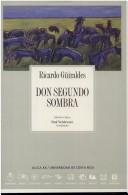
Ricardo Güiraldes · 1926
An orphaned boy apprentices himself to an aging, taciturn gaucho across the Argentine pampas. A lyrical elegy for a figure of national identity already being erased by modernization.

Mariano Azuela · 1915
A peasant band is swept into revolutionary violence they barely understand or control. Written amid the actual fighting, it remains the Mexican Revolution's first great, unheroic novel.